US Family Based Green Card Process: A Step-by-Step Guide for Expats & Sponsors
Reuniting with your family on American soil should be an exciting journey, not an endless bureaucratic nightmare. Yet, navigating the us family based green card process often leaves sponsors and foreign relatives trapped in a maze of confusing government forms and shifting timelines.
Whether you are a US citizen residing in London, an expat professional stationed in Dubai, or living stateside in Texas, understanding how United States Citizenship and Immigration Services (USCIS) handles immigrant petitions is critical. A single clerical error or missing affidavit can trigger months of administrative setbacks.
This comprehensive pillar guide breaks down the entire roadmap into clear, manageable steps. From filing your initial petition to clearing your consular interview, here is everything you need to know to secure legal permanent residency for your loved ones.
Understanding Immediate Relatives vs. Family Preference Categories
Before filling out a single application, you must identify which legal category your relative falls under. The Immigration and Nationality Act (INA) splits family immigration into two distinct pipelines: Immediate Relatives and Family Preference Categories.
Immediate Relatives always take priority. United States immigration law sets no annual quotas or numerical caps on immigrant visas issued to the spouses, unmarried children under 21, and parents of US citizens. As soon as your paperwork clears the system, an immigrant visa number is immediately available.
In contrast, Family Preference categories are subject to strict annual caps set by Congress. Because demand far outstrips supply, applicants in these categories must wait for their “Priority Date” to become current on the Department of State’s monthly Visa Bulletin before an immigrant visa can be issued.
“To know the current delays and NVC rules, read our complete guide on f2a visa processing time spouse of green card holder.”
Sponsoring Spouses and Fiancés (Marriage-Based Paths)
Bringing a foreign partner to the United States depends heavily on your current marital status and where your partner currently resides. If you are already legally married, the foreign spouse will enter through consular processing or adjust their status.
One of the most critical legal distinctions to understand early on is the difference between ir1 and cr1 visa. If you have been married for less than two years when entering the US, your spouse receives a conditional two-year green card (CR1). Marriages older than two years grant an unrestricted 10-year permanent resident card (IR1).
Location also plays a massive role in how fast your paperwork moves through the pipeline. For instance, couples dealing with the cr1 visa processing time middle east frequently face localized administrative processing queues at regional embassies in Abu Dhabi, Doha, or Riyadh that differ significantly from European posts.
If you are engaged rather than married, the K-1 visa allows your foreign partner to enter the United States for 90 days to marry you. However, sponsors must prove financial stability from day one. Falling short of the mandatory k1 fiance visa income requirements on the federal poverty guidelines will halt the petition immediately.
Some couples wonder whether the older non-immigrant spouse route is faster. When weighing k3 spouse visa vs cr1 processing, modern immigration data shows that the K-3 visa is virtually obsolete today. The National Visa Center almost always consolidates the filings into the standard immigrant visa route instead.
Bringing Parents and Siblings to America
US immigration laws permit citizens who are at least 21 years old to petition for their parents and siblings. However, the timelines for these two family groups could not be further apart.
Parents of adult US citizens enjoy Immediate Relative status. Knowing how to sponsor parents for green card usa allows families to bypass the visa bulletin entirely, making it one of the smoothest family reunification routes available as long as you meet the financial sponsorship criteria.
On the other hand, brothers and sisters fall into the Family Fourth Preference (F4) category. Because global demand is immense and annual statutory quotas are limited, the f4 sibling green card waiting time routinely stretches anywhere from 14 to over 22 years, especially for applicants from high-volume countries. Understanding these realistic timelines prevents families from making sudden, disruptive life decisions prematurely.
The Core Steps of the US Family Based Green Card Process
Securing a green card is a relay race between multiple government agencies. Knowing which department holds your case file saves you from months of silent panic.
The entire journey hinges on two consecutive milestones: establishing legal eligibility, then obtaining the actual immigrant visa.
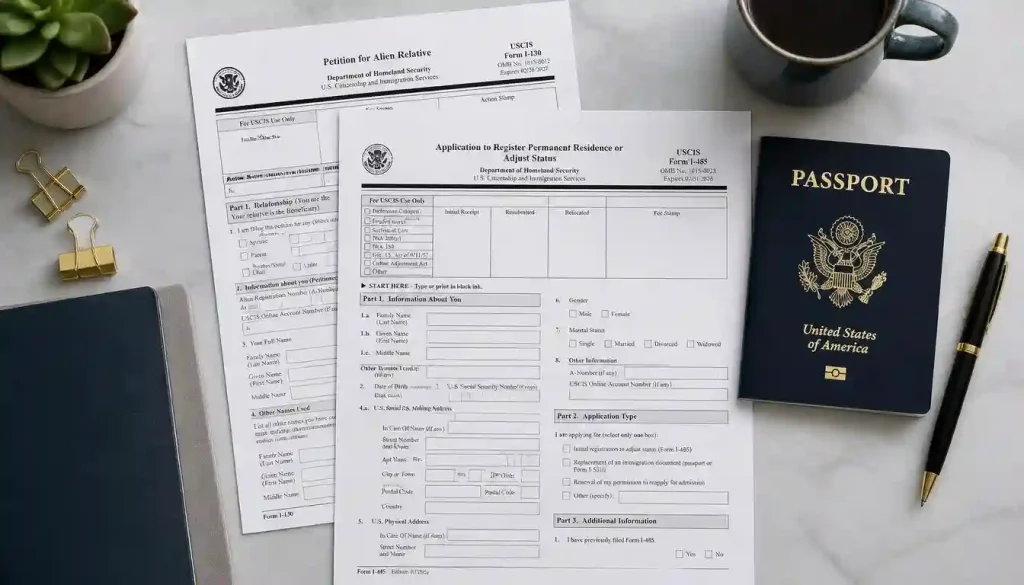
Step 1: Establishing the Family Bond (USCIS Stage)
Everything starts with the US petitioner submitting Form I-130 to USCIS. This step does not grant any immigration rights yet. Its sole purpose is proving your bona fide familial connection.
The most stressful variable for families is the i-130 petition for alien relative timeline. Depending on whether your sponsor is a US citizen or a permanent resident, USCIS service center processing queues can fluctuate between 10 months to well over two years.
Do not submit generic documentation. USCIS officers scrutinize commingled bank records, joint lease agreements, birth certificates, and dated personal photos to detect fraud.
Step 2: Choosing Your Processing Track (NVC vs. USCIS)
Once USCIS approves your initial petition, your path splits based on geographic location:
- Consular Processing (Living Abroad): Your approved file moves to the National Visa Center (NVC). You will complete DS-260 online and attend your visa interview at the designated US embassy in your home country.
- Adjustment of Status (Living Inside the US): If your relative entered legally on a valid visa, they can often remain stateside while filing.
For couples already living together inside the United States, filing for an i-485 adjustment of status marriage based petition eliminates foreign embassy visits entirely. This route allows the applicant to apply for concurrent work authorization and advance parole travel permits while awaiting their final decision.
The Crucial Interim Steps: Biometrics and Travel Permits
Once your paperwork is accepted, you cannot simply sit back. Within a few weeks, USCIS will mail you an appointment notice for biometrics screening. You must visit a local Application Support Center (ASC) to provide your fingerprints and photographs for FBI background checks.
Furthermore, if you are applying from inside the US, never leave the country without an approved Advance Parole document (Form I-131). Traveling internationally while your green card application is pending without this permit will automatically abandon your entire petition, forcing you to start over.
From the Final Interview to Unrestricted Permanent Residency
The final phase transforms an immigrant visa applicant into a lawful US permanent resident. Preparation at this stage makes or breaks your application.
Mastering the Interview Stage
Whether you step into an embassy in Dubai or an immigration field office in Chicago, consular officers test the legitimacy of your relationship.
You must bring updated tax transcripts, physical identity papers, and your sealed medical clearance envelope. Studying common us marriage visa interview questions and answers ahead of time builds confidence and ensures both partners provide consistent, authentic answers under pressure.
Removing Conditions After Arrival
Congratulations—your relative’s visa is approved! But for married couples, the legal work does not completely stop at the airport.
If you received a conditional two-year status upon entry, you must follow the form i-751 removal of conditions guide during the 90-day window right before your card expires.
Failing to jointly file Form I-751 on time automatically terminates permanent resident status and places the foreign spouse into active removal proceedings.
Estimated Government Fees and Processing Timelines
Financial planning is just as important as gathering your paperwork. The government charges specific filing fees at different stages of the US family based green card process.
These fees are non-refundable, even if your immigration petition is ultimately denied.
Depending on whether you apply from overseas (Consular) or inside the US (Adjustment of Status), your total costs will vary. Below is a realistic breakdown of the primary government fees you should anticipate in 2026:
| Application / Form Type | Estimated Fee (USD) | Who Processes It? |
|---|---|---|
| Form I-130 (Petition for Alien Relative) | $625 – $675 | USCIS |
| Form I-485 (Adjustment of Status) | $1,440 | USCIS (Stateside Only) |
| DS-260 (Immigrant Visa Application) | $325 | NVC (Overseas Only) |
| USCIS Immigrant Fee (For Green Card Printing) | $235 | USCIS |
FAQs
Can I use a joint sponsor if my income is too low?
Yes. If the primary US petitioner falls below the Federal Poverty Guidelines, you can enlist a joint sponsor. This co-sponsor must be a US citizen or permanent resident, submit Form I-864 (Affidavit of Support), and remain legally financially responsible.
How long is the immigration medical exam (I-693) valid?
A completed Form I-693 medical exam is typically valid for two years from the date the civil surgeon signs it. Because of unpredictable processing backlogs, officials often recommend waiting to complete your medical screening until just before your scheduled interview.
What happens if my child turns 21 while waiting for approval?
The Child Status Protection Act (CSPA) may freeze your child’s age to prevent them from “aging out” into a slower preference category. The specific legal calculation subtracts the I-130 processing time from the child’s biological age on the visa availability date.
Will a minor criminal record automatically deny my green card?
Not always. While serious felonies and crimes of moral turpitude trigger automatic denials, minor traffic violations or dismissed misdemeanors often do not. However, you must disclose every single arrest on your application and ideally consult an immigration attorney beforehand.
Official Sources & References
For the most accurate, up-to-date legal forms and monthly visa availability updates, always rely on these verified US government portals:
- USCIS Official Guide on Green Card Processes and Procedures
- U.S. Department of State: Family-Based Immigrant Visas
- U.S. Department of State: The Monthly Visa Bulletin