K3 Spouse Visa vs CR1 Processing: Why CR1 Wins Every Time in 2026
When an American citizen marries a foreign national, the ultimate goal is bringing them to the United States as quickly as possible. If you are stuck debating between the k3 spouse visa vs cr1 processing, the direct answer for 2026 is simple: focus entirely on the CR1 immigrant visa.
Historically, the K3 was designed to reunite families faster during massive government backlogs. Today, filing for a K3 is largely a waste of time and energy because USCIS administratively closes it in almost every single case.
This guide reveals exactly why the immigration landscape has shifted. We will uncover hidden USCIS processing loopholes and give you a bulletproof strategy to bring your spouse home without unnecessary delays.
Quick Answer: K3 Spouse Visa vs CR1 Processing
In 2026, the CR1 Immigrant Visa is the superior choice. The K3 Nonimmigrant Visa is nearly obsolete because the National Visa Center (NVC) automatically cancels (administratively closes) K3 applications when the I-130 petition arrives first. Filing for a CR1 guarantees a Green Card immediately upon arrival in the US, whereas a K3 requires additional expensive paperwork.
The 2026 Reality of K3 Spouse Visa vs CR1 Processing
For newlyweds navigating the us family based green card process, choosing the right immigration path feels overwhelming. Many couples read outdated online forums and assume they need to file multiple applications just to speed up their case.
This assumption leads to a massive legal misunderstanding. The fundamental difference between these two paths lies in the legal intent of each category.
The CR1 is a true immigrant visa. This means your spouse arrives in America and becomes a permanent resident on day one. Conversely, the K3 is a nonimmigrant visa that simply allows your spouse to enter the U.S. temporarily while waiting to adjust their status.
While the K3 sounds like a brilliant shortcut on paper, immigration law and processing logistics have drastically changed. Knowing the current reality prevents you from wasting months tracking a visa application that the U.S. government no longer actively issues.
What is the CR1 Spousal Immigrant Visa
The CR1 (Conditional Resident) visa is the most robust and secure pathway for bringing a foreign spouse to the United States. It applies to couples who have been married for less than two years at the time the spouse enters the U.S.
If you have been married for more than two years, the visa automatically upgrades to an IR1 (Immediate Relative) visa. Both follow the exact same filing procedure.
The process begins when the U.S. citizen files Form I-130, Petition for Alien Relative, with USCIS. To understand exactly how long this initial step takes, review the official I-130 Petition for Alien Relative Timeline.
Pro Tip: Always file your Form I-130 online rather than via mail. Creating a USCIS online account saves you $50 on the filing fee and allows you to track your case status in real-time.”
The greatest advantage of the CR1 visa is immediate permanent residency. Upon landing at a U.S. port of entry, your spouse’s passport is stamped, and they instantly become a Green Card holder. They can legally work, obtain a Social Security Number, and travel internationally from day one.
Additionally, the CR1 requires the US citizen to submit Form I-864 (Affidavit of Support) at the NVC stage, proving they meet the 2026 HHS Poverty Guidelines to financially sponsor their spouse.
What is the K3 Non immigrant Spouse Visa
To understand the k3 spouse visa vs cr1 processing debate, you must look at the history of U.S. immigration. The K3 visa was created by the LIFE Act in 2000.
During that era, the government was overwhelmingly backlogged. Form I-130 approvals were taking multiple years. The K3 was designed as a nonimmigrant shortcut, allowing a foreign spouse to enter the U.S. quickly and wait for their Green Card alongside their American partner.
To apply for a K3, the U.S. citizen must first file Form I-130 and receive the official receipt notice (Form I-797C). Once received, you then file Form I-129F (Petition for Alien Fiancé(e)).
Crucial Pro Tips for the K3 Application:
- The Form Name Confusion: Do not panic when you see the word “Fiancé” on Form I-129F. USCIS uses this exact same document for legally married K3 spouses.
- The Hidden Zero Fee: While Form I-129F normally requires a $675 filing fee, it is 100% free for K3 applicants. Simply attach a copy of your I-130 receipt notice, and the fee is completely waived.
The Hidden Truth About Form I-129F and Administrative Closure
Here is the deep legal secret that most online forums completely miss. Today, USCIS rarely approves K3 visas because of a systemic procedure known as “Administrative Closure.”
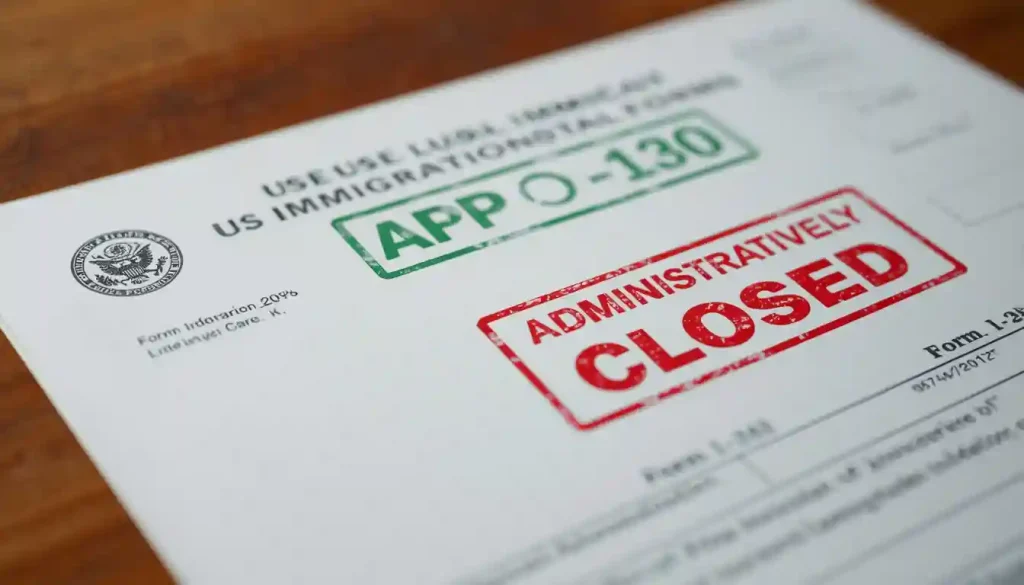
When USCIS approves your I-130 and I-129F, they send both files to the National Visa Center (NVC). If the NVC receives the approved I-130 before or at the exact same time as the I-129F, the Department of State automatically cancels the K3 visa application.
They administratively close the I-129F and force your case strictly down the CR1 immigrant visa route. Because USCIS processes forms digitally and much faster now, the I-130 almost always wins the race to the NVC. Filing the I-129F for a K3 is now essentially a waste of paper and postage.
K3 vs CR1 Visa Timeline and Cost Comparison
Understanding the logistical differences helps clarify why immigration attorneys strongly advise against the K3 route.
Here is a direct breakdown of how these two visas compare in 2026:
| Feature | CR1 Immigrant Visa | K3 Nonimmigrant Visa |
|---|---|---|
| Primary USCIS Forms | Form I-130 | Form I-130 + Form I-129F |
| NVC Processing | DS-260 & Civil Documents | DS-160 (Nonimmigrant) |
| Current Processing Time | 12 to 18 Months | Effectively obsolete (Closed at NVC) |
| Work Authorization | Granted immediately upon U.S. entry | Requires filing Form I-765 after arrival |
| Green Card Status | Mailed automatically to U.S. address | Requires filing Form I-485 (AOS) |
| Total Government Fees | ~$1,305 | ~$2,640 (Including AOS fees) |
Why Expats in the Middle East and Europe Should Focus on CR1
If you are a U.S. citizen living as an expat in Dubai, Saudi Arabia, London, or any Schengen country, your immigration strategy requires precision.
Many expats believe filing a K3 will speed up consular processing at the U.S. Embassy in Abu Dhabi or London. This is a massive misconception. High-volume embassies prioritize immigrant visas over nonimmigrant K3 applications.
“Furthermore, if your spouse enters the U.S. on a K3 visa, they do not get a Green Card automatically. You must immediately file Form I-485 (Adjustment of Status), which adds an unexpected $1,440 to your expenses and months of extra paperwork.
If you are wrapping up an employment contract in the UAE or Schengen zone, the CR1 is far superior because it grants unconditional permanent residency the moment you land. For a deep dive into specific regional delays, check out our guide on the CR1 Visa Processing Time Middle East.
The Ultimate Expat Shortcut: Direct Consular Filing (DCF)
Since the K3 is essentially obsolete, how can expats speed up the immigration process? The most powerful legal shortcut is Direct Consular Filing (DCF) under exceptional circumstances.
This procedure allows you to bypass the massive USCIS domestic backlog entirely. You can request to file your Form I-130 directly at your local U.S. Embassy (such as London or Abu Dhabi) if you are facing an urgent life event.
Qualifying emergencies for DCF typically include:
- A sudden corporate job transfer back to the U.S.
- Short-notice military deployments.
- Life-threatening medical emergencies.
If the embassy approves your DCF request, it reduces the standard CR1 processing time from 18 months down to just 2 or 3 months. This lightning-fast timeline makes the K3 visa completely irrelevant for eligible expats.
Crucial Legal Traps to Avoid During Spousal Processing
Attempting to bypass standard wait times often leads couples into severe legal jeopardy. U.S. Customs and Border Protection (CBP) officers are highly trained to spot visa manipulation.
The 90-Day Rule and Visa Fraud Flags
Some couples try to avoid the k3 spouse visa vs cr1 processing wait times entirely by using a tourist visa (B1/B2) or ESTA. They plan for the foreign spouse to enter the U.S. as a visitor and then immediately apply for a Green Card from within the country.
This triggers the dreaded 90-Day Rule. If your spouse enters the U.S. on a non immigrant visa and files for adjustment of status within 90 days, immigration officers presume “preconceived intent.”
This means they assume your spouse lied to the border officer about their true reason for visiting. Visa fraud carries a permanent lifetime ban from the United States.
Surviving Consular Fraud Investigations and Stokes Interviews
Whether you process your visa at an embassy in London or stateside with USCIS, a lack of solid evidence triggers a severe fraud investigation. Domestically, this is known as a Stokes Interview, where you and your spouse are separated and aggressively interrogated about intimate details. Embassies employ similar separation tactics.
To ensure you never face this nightmare, you must over-prepare your bona fide marriage evidence. Review our comprehensive list of US Marriage Visa Interview Questions and Answers to bulletproof your case before stepping into the embassy.
FAQs
What happens to my children if I apply for a K3 visa?
If you pursue a K3, your unmarried children under 21 can apply for a K4 derivative visa. However, since the National Visa Center almost always cancels K3 applications in favor of the CR1, you should file separate I-130 petitions for your stepchildren immediately.
Do I lose my filing fees if the K3 visa is administratively closed?
No. There is currently no USCIS filing fee for Form I-129F when it is submitted specifically for a K3 spouse. Because you only pay the mandatory Form I-130 fee, you do not lose any extra government money when the K3 is automatically canceled.
Does filing Form I-129F speed up the I-130 at USCIS service centers?
Many applicants mistakenly believe submitting the I-129F forces USCIS to process the underlying I-130 faster. This is a complete myth. Service centers process petitions based strictly on standard queues and receipt dates. Adding K3 paperwork does not grant expedited processing status.
Can a K3 visa holder bypass the conditional Green Card stage?
If a K3 enters the U.S. and officially adjusts their status after the couple’s second wedding anniversary, they receive a permanent 10-year Green Card. If approved before the two-year mark, they receive a conditional card and must file Form I-751 Removal of Conditions Guide later.
Your Next Actionable Steps for Spousal Immigration
The debate over k3 spouse visa vs cr1 processing is ultimately a distraction for modern applicants. The U.S. immigration system has fundamentally evolved, making the nonimmigrant K3 effectively obsolete.
Chasing this outdated shortcut will only cause unnecessary paperwork and frustration when the National Visa Center administratively closes your supplementary file.Your most secure and financially sound strategy is to file a meticulous Form I-130 from the very beginning.
Front-load your initial petition with undeniable evidence of a bona fide marriage to prevent costly Requests for Evidence (RFEs). Focus all your energy on preparing for the consular interview so your spouse can confidently enter the United States as a lawful permanent resident on day one.
Sources and References
- USCIS Official Instructions for Petition for Alien Relative
- U.S. Department of State Nonimmigrant Visa for a Spouse (K-3)
- USCIS Official Guidelines for Petition for Alien Fiancé(e)
- National Visa Center (NVC) Immigrant Visa Processing Steps