How to Respond to an RFE for Bona Fide Marriage (I-130 Guide 2026)
Opening a letter from USCIS only to find a blue Request for Evidence (RFE) notice can instantly trigger panic. When you are applying for a spousal visa, an RFE for a bona fide marriage simply means the immigration officer is not completely convinced that your relationship is genuine based on your initial Form I-130 submission.
Do not panic. Receiving an RFE is not a denial—it is a second chance to prove your case.
Knowing exactly how to respond to an rfe for bona fide marriage i-130 requires strategy, meticulous organization, and providing the exact high-quality financial and emotional evidence USCIS is searching for in 2026. This guide provides the exact checklist and cover letter template you need to get your petition back on track for approval.
Quick Answer: How to Respond to an I-130 Marriage RFE
To successfully respond to an RFE for a bona fide marriage, follow these exact steps:
- Identify Missing Documents: Read the entire notice to find exactly what the officer is asking for.
- Gather Tier-1 Evidence: Collect new, high-quality financial proof you did not submit previously (e.g., joint bank statements, leases).
- Write a Cover Letter: Draft a detailed RFE response letter indexing all your new evidence.
- Mail the Packet Correctly: Place the original blue RFE letter on top of your packet and mail it before the strict USCIS deadline.
Why Did USCIS Send an RFE for Your I-130 Petition?
Before you start gathering documents, you must understand why the reviewing officer paused your case. USCIS operates under strict fraud-prevention guidelines.
If they suspect a marriage was entered into solely for immigration benefits (a “green card marriage”), they will issue an RFE.
Typically, couples receive an RFE for one of three reasons:
- Lack of Joint Financial Documents: You provided photos and text messages, but no hard evidence of comingled finances (joint bank accounts, shared utility bills, or joint tax returns).
- Insufficient Cohabitation Proof: You failed to prove that you and your spouse actually live together at the same physical address (missing joint leases or property deeds).
- Weak Initial Submission: Your original Form I-130 packet was too thin, disorganized, or contained undated/unlabeled evidence.
To win your case, your response cannot simply resubmit the exact same photos or letters you already sent. You must provide new, undeniable proof of a shared life.
The Legal Standard: “Preponderance of the Evidence”
When evaluating your RFE response, USCIS officers apply a legal standard known as the “preponderance of the evidence.” This simply means you must prove that it is more likely than not (greater than 50% probability) that your marriage is genuine.
You do not need to prove it beyond all reasonable doubt, but your Tier 1 financial documents must tip the scale heavily in your favor.
The Ultimate Bona Fide Marriage Evidence Checklist
Not all evidence carries the same weight with USCIS. If you received an rfe for lack of joint financial documents, submitting another hundred photos of your wedding will not solve the problem.
USCIS divides evidence into two categories: Tier 1 (Primary) and Tier 2 (Secondary). Your response must heavily focus on Tier 1 documents. To pass the officer’s scrutiny, use this definitive bona fide marriage evidence checklist:
| Tier 1 Evidence (Strongest: Financial & Legal) | Tier 2 Evidence (Supporting: Social & Emotional) |
|---|---|
| Joint bank account or credit card statements | Photographs of the couple with family and friends (dated) |
| Residential lease or property deed with both names | Flight itineraries and hotel receipts from joint vacations |
| Jointly filed tax returns or IRS tax transcripts | Screenshots of daily text messages and call logs |
| Life insurance policies naming the spouse as a beneficiary | Sworn affidavits from friends, employers, or landlords |
| Shared utility bills (electricity, water, internet) | Social media posts showing relationship milestones |
The Micro-Details: Avoiding the “Continuity Trap” & Invalid Affidavits
When assembling your evidence, two microscopic details often mean the difference between an approval and a denial:
- The Evidence Continuity Trap: USCIS officers actively look for “gaps” in your timeline. Do not just submit a bank statement from the month you got married and one from the current month. You must prove a continuous commingling of lives. Submit at least one joint statement for every single quarter (every 3 months) spanning the entire duration of your marriage.
- The “Penalty of Perjury” Clause for Affidavits: If you submit sworn letters from friends or family (Tier 2 evidence), a simple signed letter is legally useless. Every single affidavit MUST conclude with this exact federal phrasing: “I swear, under penalty of perjury, that the foregoing is true and correct to the best of my knowledge.” Furthermore, having these affidavits notarized adds an extra layer of undeniable legal weight.
The Ultimate Attorney Secret: The “Yellow Highlighter” Trick
Do not expect a fatigued USCIS officer to read through 50 pages of dense bank statements or phone logs to find your joint transactions. They simply do not have the time. Top-tier immigration attorneys use a psychological trick: The Yellow Highlighter.
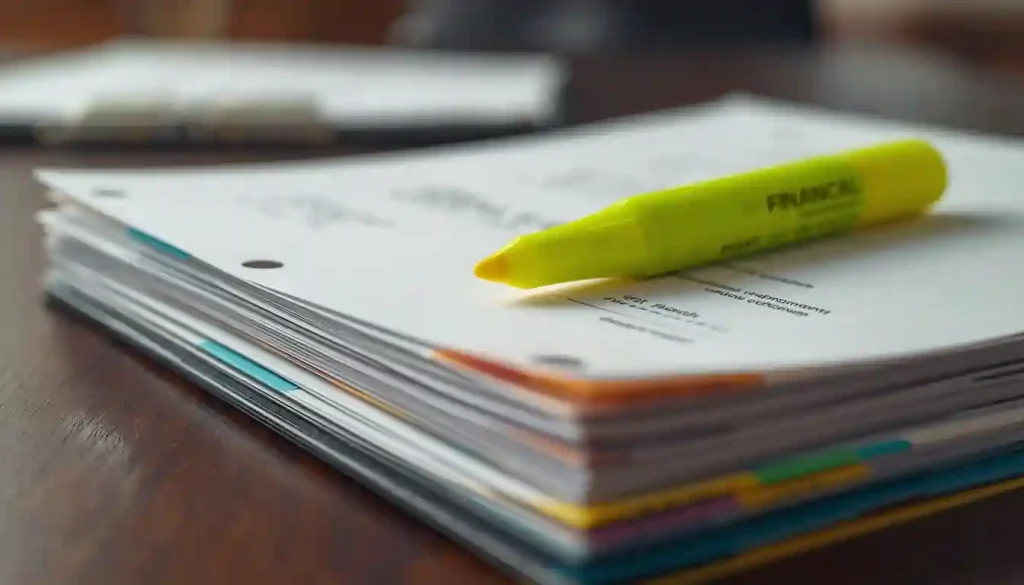
Before scanning or mailing your Tier 1 financial documents, take a bright yellow highlighter and physically highlight both of your names, your shared address, and specific joint purchases (like rent payments, couple’s vacations, or utility bills) on the pages.
This immediately directs the officer’s eyes to the exact proof they need, saving them time and drastically increasing your chances of a rapid approval.
Pro Tip for Expats: If you and your spouse live in different countries and cannot have a joint lease or utility bills, you must explain this directly in your cover letter. Substitute these with proof of financial support (e.g., Western Union or Remitly transfer receipts) and passport stamps showing frequent visits.
The Federal USB Drive Ban & Photographic Formatting Rules
When submitting Tier 2 photographic evidence, many couples make a fatal mistake: they mail a USB flash drive, CD, or SD card containing their wedding videos and digital photos. USCIS officers are strictly prohibited from inserting external digital media into government computers due to federal cybersecurity protocols. Any USB drive you send will be immediately destroyed or ignored.
How to format photos correctly: Never send loose 4×6 photographs, as they easily slip out of standard USCIS physical files. Instead, print 2 to 4 photos per standard 8.5″ x 11″ (or A4) sheet of paper. Underneath every single photo, you must type a clear caption that includes the exact date, the location, and the full names of the people pictured.
The Tier 2 Digital Trap: The “WhatsApp Nickname” Rule
When submitting digital chat logs (WhatsApp, Messenger, or iMessage) as Tier 2 evidence, 90% of couples make a critical error: they submit screenshots where the contact name is saved as a pet name, such as “My Love ❤️” or “Hubby.”
USCIS officers will routinely disregard these screenshots. Because anyone can change a contact name in their phone to fake a conversation, pet names carry zero legal weight. To make your chat logs valid, you must include a “Contact Profile Screenshot” that proves the pet name is directly linked to your spouse’s actual, verifiable phone number.
Additionally, do not submit 500 pages of mundane daily chats. Select 2-3 pages per month that specifically discuss your shared life, future plans, or joint finances, ensuring the exact date and time stamps are clearly visible on every single page.
The Perfect I-130 RFE Response Letter Template
An unorganized stack of papers is an immigration officer’s worst nightmare. Your evidence must be accompanied by a meticulously organized cover letter that serves as an index for your documents.
Below is a highly effective i-130 rfe response letter template. Simply copy, fill in your specific details, and place it directly beneath the original blue RFE notice in your mailing packet.
[Date]
USCIS [Name of Service Center on your RFE]
[Address exactly as it appears on the RFE envelope]
RE: Response to Request for Evidence
Petitioner: [US Citizen’s Full Name]
Beneficiary: [Foreign Spouse’s Full Name]
Receipt Number: [Your I-130 Receipt Number, e.g., IOE1234567890]
Dear USCIS Officer,
Enclosed please find the additional evidence requested regarding the Form I-130 petition filed on behalf of my spouse, [Spouse’s Name]. The original blue Request for Evidence notice is attached at the top of this packet.
To further establish the bona fide nature of our marriage, I am submitting the following documents, clearly labeled and organized:
- Exhibit A: Joint Bank Account Statements (January 2026 – Present)
- Exhibit B: Copy of our Joint Residential Lease Agreement
- Exhibit C: 2025 Joint IRS Tax Return Transcript
- Exhibit D: Evidence of Remittance (Money transfer receipts showing financial support)
- Exhibit E: Flight itineraries and passport stamps from my recent visits to [Spouse’s Country]
Thank you for your time and continued processing of our case. Should you require any further information, please contact me at [Phone Number] or [Email Address].
Sincerely,
[Petitioner’s Original Ink Signature]
[Petitioner’s Printed Name]
How to Physically Assemble Your RFE Packet (USCIS Insider Rules)
USCIS handles thousands of files daily. How you physically organize your packet directly impacts how fast the officer can review it. Follow these strict USCIS assembly guidelines:
- Do Not Use Staples: USCIS must scan your documents into their digital system. Heavy staples frustrate officers and delay scanning. Use standard paper clips or binder clips instead.
- Two-Hole Punch the Top: USCIS secures documents in their physical folders using two-prong fasteners at the top. Two-hole punching your entire packet at the top edge shows immense professionalism.
- Bottom Tabs for Exhibits: Use sticky tabs at the bottom of the pages to separate Exhibit A, Exhibit B, etc. Do not put tabs on the side, as they get crushed in standard USCIS filing cabinets.
- The Order of Documents: 1) The original blue RFE letter goes on top. 2) Your Cover Letter. 3) Your indexed evidence (Exhibits).
Two Fatal Mistakes That Ruin RFE Responses
Even with perfect evidence, your response can be rejected if you fail to follow these two strict USCIS formatting rules:
- The Certified Translation Rule: If any of your evidence (such as a foreign lease agreement, utility bill, or bank statement) is in a language other than English, you must include a full English translation. The translator must attach a signed certification stating they are competent to translate and that the document is completely accurate. USCIS will outright ignore foreign-language documents without this certification.
- The “Wet Signature” Requirement: Never use digital, typed, or stamped signatures on your RFE cover letter or third-party affidavits. USCIS requires original “wet signatures” signed by hand, preferably in black ink, to verify authenticity.
Crucial 2026 Technical Rules for Online RFE Uploads
If you originally filed your Form I-130 online, you will likely upload your RFE response digitally through your USCIS account. However, thousands of applicants get denied each year due to avoidable technical errors. If uploading online, you must follow these absolute rules:
- The Password-Protected PDF Trap: Most downloaded bank statements and tax transcripts are encrypted or password-protected by the bank. USCIS systems cannot open password-protected files. If an officer clicks your file and it asks for a password, they will instantly mark the evidence as “not submitted.” You must print the statements and re-scan them, or use a PDF tool to permanently remove the encryption before uploading.
- The 12MB Limit & File Naming: The USCIS portal has a strict file size limit of 12MB per document. Compress your files if they are too large. Furthermore, only use English letters and numbers in your file names (e.g.,
Joint_Bank_Statement_2026.pdf). Using foreign characters or symbols (like #, %, or &) will cause system errors and corrupt the file. - The Barcode Requirement for Physical Mail: If you are mailing a physical packet instead of uploading online, the absolute first page of your packet MUST be the original colored RFE notice containing the scanning barcode. If this barcode is missing, the mailroom cannot link your response to your digital A-file, leading to an automatic denial for “abandonment.”
What Happens After RFE Response is Received for I-130?
After you meticulously assemble your packet and mail it, the waiting game begins again. Many applicants constantly refresh their screens, wondering exactly what happens after rfe response is received i-130.
Once your physical or digital packet is delivered, it usually takes USCIS 7 to 14 days to update your online case status. Your tracker will change to: “Response To USCIS’ Request For Evidence Was Received.”
This status update is your confirmation that your documents are safely in the hands of the reviewing officer. From this point forward, the officer will re-evaluate your entire case file, combining your original Form I-130 with your newly submitted evidence. If the new evidence satisfies their doubts about your bona fide marriage, your case will proceed to approval, and subsequently be sent to the National Visa Center (NVC).
FAQs
Can I ask USCIS for an extension on the RFE deadline if I need more time?
No. USCIS strictly enforces the deadline printed on your blue notice (usually 87 days). There are no extensions granted for I-130 RFEs. If you cannot get a specific document (like an IRS tax transcript) in time, you must submit your response with the best alternative evidence you have before the deadline expires.
Will getting an RFE mean we will automatically face a Stokes Interview?
Not necessarily. While an RFE means the officer has initial doubts, a strong and perfectly organized RFE response can completely clear those doubts. In fact, an overwhelming response with high-quality Tier 1 financial documents often leads to a direct approval without any interview.
Can the foreign spouse visit the U.S. on a tourist visa while the RFE is pending?
Technically yes, but it is highly risky. U.S. Customs and Border Protection (CBP) officers can see the pending I-130 and the active RFE in their system. Because you have demonstrated clear “immigrant intent,” the CBP officer may deny you entry at the airport, fearing you will overstay your B1/B2 visa.
We live with our parents and have no lease or utility bills. How do we prove cohabitation?
This is a very common scenario. If you live rent-free with family, have the homeowner (e.g., your parents) write a notarized affidavit explicitly stating that both you and your spouse reside at their property. To strengthen this, show that both spouses have officially updated this exact address on their driver’s licenses, bank accounts, and even Amazon delivery labels.
How do I respond to an I-130 RFE for bona fide marriage?
Read the RFE letter carefully to see exactly what is missing. Gather strong joint evidence like shared bank statements, a residential lease, utility bills, and recent photos. Organize these documents with a cover letter and mail everything back in a single package before the deadline.
Final Thoughts on How to Respond to an RFE for Bona Fide Marriage I-130
Receiving a Request for Evidence can feel like a devastating setback, but armed with the right strategy, it is entirely manageable. By understanding how to respond to an rfe for bona fide marriage i-130, utilizing a structured evidence checklist, and writing a clear index letter, you take control of the narrative.
Focus entirely on high-tier financial and cohabitation evidence. Leave no room for doubt, strictly follow the deadlines, and you will successfully guide your spousal visa petition across the finish line.
For the next steps after your I-130 is approved, review our comprehensive guide on the US Family Based Green Card Process.
Source of Information:
- Department of State: Immigrant Visa Process & Required Documents
- USCIS Official Instructions for Form I-130, Petition for Alien Relative
- USCIS Policy Manual: Chapter 6 – Adjudicative Steps and Requests for Evidence (RFE)