Difference Between EB-2 and EB-3 Visa Processing and Requirements
Choosing the right employment-based green card route often comes down to knowing the exact difference between eb-2 and eb-3 visa processing and requirements before your employer starts filing paperwork. Both pathways lead to permanent residency, but they differ sharply in educational baselines, mandatory prevailing wages, and monthly Visa Bulletin movement.
Before starting corporate sponsorship, you can explore our complete EB-5 investor visa requirements and process guide to compare employer petitions with self-funded investment paths. You can also consult the official USCIS Form Filing Guidelines to verify general submission rules and avoid costly petition downgrades later on.
Difference Between EB-2 and EB-3 Visa Processing and Requirements
Evaluating the procedural and legal landscape between these two employment preferences helps candidates anticipate documentation challenges and long-term priority dates:
| Evaluation Factor | EB-2 Preference Tier | EB-3 Preference Tier |
|---|---|---|
| Academic Minimums | U.S. Master’s (or Bachelor’s + 5 yrs progressive experience) | U.S. Bachelor’s degree or 2 yrs vocational training |
| Sub-Categories | Advanced Degree, Exceptional Ability, EB-2 NIW | Professionals, Skilled Workers, Other Workers |
| PERM Labor Cert | Mandatory (waived only for EB-2 NIW self-petitions) | Mandatory for all sub-categories without exception |
| Prevailing Wage Level | Higher salary obligations (Typically Level 3 or 4) | Standard entry/mid-tier wages (Level 1 or 2) |
| Self-Petition Right | Allowed via National Interest Waiver (NIW) | Not allowed; requires active employer sponsor |
Detailed EB-2 Visa Requirements & The NIW Option
The EB-2 category is designed for professionals holding advanced credentials or showing exceptional expertise in their respective sectors:
- Advanced Degree Track: The job role itself must require an advanced degree. You need either a Master’s degree or a Bachelor’s degree followed by five years of progressive work experience in that specialty, as detailed under USCIS EB-2 Advanced Degree Guidelines.
- Exceptional Ability Standard: If you do not hold an advanced degree, you can qualify by meeting at least three official criteria—such as ten years of field experience, official licensing, or recognized industry awards.
- The National Interest Waiver (NIW): If your work carries substantial merit and national importance to the United States, you can skip employer sponsorship and the labor market test altogether by filing a self-petition.
Detailed EB-3 Visa Tracks & Eligibility
The EB-3 category serves a wider pool of international candidates across three distinct sub-categories governed by USCIS EB-3 Skilled and Professional Regulations:
- EB-3 Professionals: Intended for jobs that require a standard U.S. Bachelor’s degree (or foreign degree equivalent). Work experience cannot replace the degree requirement in this sub-tier.
- EB-3 Skilled Workers: Covers jobs requiring at least two years of specialized technical training or practical experience rather than a four-year academic degree.
- EB-3 Other Workers (Unskilled): Applies to essential positions requiring less than two years of training. To calculate the overall financial differences between corporate legal retainers and investment pathways, review our EB-5 visa total cost and investment guide.
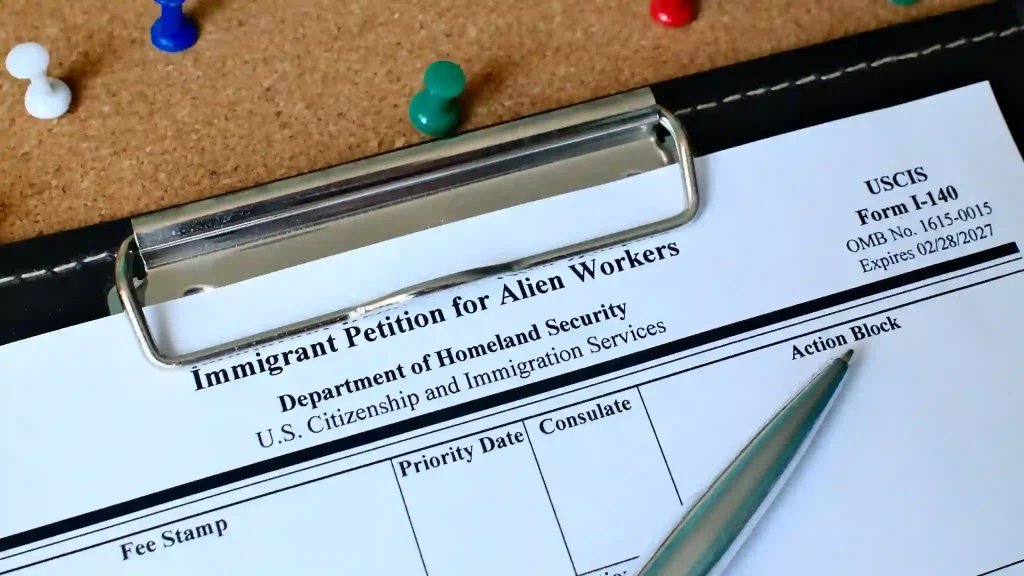
Employer “Ability to Pay” Requirement (Form I-140)
USCIS closely checks whether your sponsoring employer can realistically afford your wage. From the day your labor certification is filed until you receive your green card, the sponsoring business must prove continuous financial health:
- Tax & Financial Evidence: Employers submit annual corporate tax returns (Form 1120/1120-S) or audited statements showing net income or net current assets that meet or exceed your offered wage.
- Current Payroll Proof: If corporate net income appears tight, your employer can satisfy this rule by showing they already pay you the full prevailing wage on your regular paystubs.
- Corporate Solvency: A serious financial drop or company insolvency during filing can trigger petition denial, making continuous employer stability critical.
The 3-Step PERM and I-140 Workflow
Unless you qualify for an EB-2 NIW, your green card process follows three sequential steps with the U.S. Department of Labor (DOL):
Visa Bulletin: Dates for Filing vs Final Action Dates
When tracking the Official Department of State Visa Bulletin, candidates must examine the operational difference between eb-2 and eb-3 visa processing and requirements across two separate cut-off charts:
- Dates for Filing: Tells you when you are permitted to submit your Form I-485 adjustment of status docket alongside employment authorization (EAD) and travel documents.
- Final Action Dates: Reflects when statutory immigrant visa numbers are physically available for USCIS to issue final Green Card approvals.
- Monthly USCIS Choice: Each month, USCIS updates its dedicated filing chart notice indicating whether applicants must follow “Dates for Filing” or the stricter “Final Action Dates.”
Priority Dates, Retrogression & Downgrades
Your priority date is locked the day your PERM application is submitted (or when Form I-140 is received for NIW):
- Visa Retrogression: When applicant volume exceeds annual limits, cut-off dates move backward. To understand how country backlogs affect processing timelines, explore our EB-5 visa processing time and priority date guide.
- EB-2 to EB-3 Downgrade: If EB-3 cut-off dates advance ahead of EB-2, an applicant with an approved EB-2 can file a second Form I-140 under EB-3, keeping their original priority date to file Form I-485 earlier.
- Interfiling: If EB-2 speeds up again while an I-485 is pending, applicants can ask USCIS to switch their application basis back to EB-2 without refiling the primary docket.
AC21 Job Changes & Cross-Chargeability
Two immigration rules offer critical flexibility and strategic relief through long employment-based queues:
- AC21 Job Portability (180-Day Rule): Once your Form I-485 has been pending for 180 days with an approved I-140, you can switch to a new employer in a “same or similar” role by submitting Form I-485 Supplement J without restarting PERM.
- Cross-Chargeability: If you were born in a backlogged country (like India or China) but your spouse was born in a non-backlogged country (such as Bangladesh or the UK), you can apply under your spouse’s country quota to avoid years of waiting.
FAQs
Can my employer downgrade my EB-2 to EB-3 without a new PERM?
Yes. If the approved PERM job requirements accommodate both degree levels, your employer can file a new Form I-140 under EB-3 using the existing PERM while keeping your original priority date.
What happens if I change jobs after my I-485 is pending for 180 days?
Under AC21 rules, your green card application stays valid as long as your I-140 is approved and your new job is in the same or similar occupational field. You just need to submit Form I-485 Supplement J.
How does cross-chargeability help backlogged applicants?
It lets you use your spouse’s country of birth for visa allocation. This allows backlogged applicants to bypass multi-year country limits and get green cards significantly faster.
What is the prevailing wage difference between EB-2 and EB-3?
Because EB-2 roles require advanced degrees, the Department of Labor assigns them higher skill levels (Level 3 or 4), meaning employers must commit to paying a higher baseline salary than for EB-3 roles.
Can I use Premium Processing for EB-2 and EB-3 petitions?
Yes. Filing Form I-907 gives you a decision within 15 calendar days for standard EB-2 and EB-3 petitions, and within 45 calendar days for EB-2 NIW filings.
Navigating Your Permanent Residence Pathway
Understanding the real difference between eb-2 and eb-3 visa processing and requirements helps you and your employer build a smoother green card strategy. Whether you rely on employer PERM filings, use AC21 job flexibility, or self-petition through an EB-2 NIW, planning your qualifications and priority dates carefully protects your path to permanent residence.
Official Regulatory Sources & Legal Guidelines
- USCIS EB-2 Advanced Degree Guidelines: USCIS Immigrant Petition for Advanced Degree Workers
- USCIS EB-3 Skilled and Professional Workers: USCIS Employment-Based Immigration Third Preference EB-3
- Department of Labor PERM Portal: U.S. DOL Foreign Labor Certification Portal
- Official Visa Bulletin Updates: U.S. Department of State Visa Bulletin