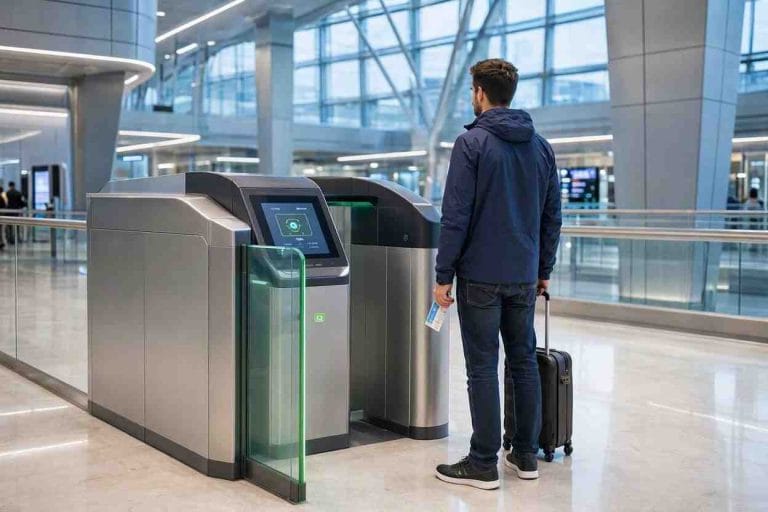
USA B1/B2 Visa Requirements: Beat 214(b) Denials
The biggest pitfall applicants face is assuming that a prepaid hotel booking and a return flight itinerary guarantee consular approval under section 214(b) of the Immigration and Nationality Act. To overcome the strict legal presumption of immigrant intent, you must comprehensively satisfy the USA B1/B2 Visa Requirements with concrete evidence of binding ties to your home country.
Let’s get straight to the point: consular officers make baseline adjudication decisions within the first three to four minutes of your interview window. Proving absolute financial solvency, transparent travel purposes, and an unabandoned foreign residence is mandatory to secure your nonimmigrant visitor classification and avoid sudden rejections.
Deciphering the USA B1/B2 Visa Requirements Framework
Understanding the foundational USA B1/B2 Visa Requirements requires analyzing the statutory framework established by the U.S. Department of State. The B-category classification is legally bifurcated into two distinct streams: the B-1 for temporary business engagements and the B-2 for pleasure, tourism, or medical treatment.
Officers evaluating your petition rely heavily on the Foreign Affairs Manual (FAM) guidelines to determine if your proposed activities strictly align with permissible nonimmigrant parameters. You must demonstrate that your intended stay has a finite, specific duration and that you hold no intention of abandoning your primary foreign domicile.
Any ambiguity regarding your employment status abroad, long-term housing commitments, or familial responsibilities immediately raises red flags during the evaluation process. Applicants who present vague itineraries or lack verifiable socioeconomic anchors in their country of citizenship face the highest statistical probability of receiving administrative refusals.
Read More: How to Apply for US B1 B2 Visa from Dubai for Expats
Overcoming the INA 214(b) Presumption of Immigrant Intent
Section 214(b) is the most formidable legal barrier in the U.S. immigration system, fundamentally stating that every visitor is presumed to be an intending immigrant until they prove otherwise. Defeating this statutory presumption requires presenting a compelling narrative of your established life, rather than just showing a healthy bank balance.
Consular officers evaluate your overall socioeconomic footprint, looking for deep-rooted “binding ties” that would compel you to return home after a brief U.S. visit. These ties encompass stable, long-term employment, active business ownership, substantial real estate holdings, and immediate family members remaining in your home country during your travel period.
When assessing these factors, adjudicators look at the holistic picture of your life trajectory to ensure your travel makes logical sense. A sudden, unexplained desire to spend three months touring multiple U.S. states without a corresponding leave of absence from a stable job will almost certainly trigger a 214(b) denial, regardless of your personal wealth.
Financial Solvency and Third-Party Sponsorship Nuances
Funding your travel independently always presents the strongest case, but navigating the nuances of third-party financial sponsorship requires careful strategic planning. A common rule of thumb is that officers prefer applicants who can easily cover their own flight, accommodation, and emergency medical expenses without liquidating their primary savings.
If your trip is being sponsored by a U.S. relative or a corporate entity, the sponsor must provide verifiable proof of their own financial capacity alongside a clear explanation of why they are funding your journey. You must still independently meet the core USA B1/B2 Visa Requirements regarding your ties to your home country; a sponsor’s wealth cannot compensate for your lack of foreign residence.
Applicants relying on a sponsor often mistakenly assume that filing a Form I-134 (Declaration of Financial Support) guarantees a visa issuance. In reality, while an I-134 proves financial backing, it actually heightens the officer’s scrutiny regarding your intent to return, making your personal employment and property documents even more critical to the final decision.
DS-160 Preparation: Strategic Data Entry Tactics
The Form DS-160 is not merely an administrative intake form; it is the absolute backbone of your consular interview and the primary document officers use to pre-adjudicate your case. Every single data point entered into the Consular Electronic Application Center database is scrutinized through automated security algorithms before you even approach the embassy window.
Inconsistencies between your DS-160 entries, your verbal interview answers, and your physical documentation are the leading cause of credibility-based denials. You must accurately disclose your five-year employment history, comprehensive travel records, and full social media presence without omitting any platforms used for public communication.
Failing to list prior U.S. visa rejections or obscuring previous extended stays in the United States will be instantly flagged by the consular database systems. Absolute transparency is your strongest asset; attempting to manipulate job titles or inflate income figures on the DS-160 usually results in permanent ineligibility findings under misrepresentation statutes.
Permissible Business vs. Tourism Activities Matrix
A critical component of avoiding border trouble is understanding the exact legal boundaries of what you are permitted to do while physically present in the United States. Conflating business activities with unauthorized productive labor is a rapid path to visa cancellation and expedited removal.
| Visa Classification | Permitted Legal Activities | Strictly Prohibited Activities |
| B-1 (Business) | Negotiating contracts, consulting with associates, attending scientific or professional conventions | Engaging in productive employment, receiving a U.S. salary, long-term freelance work |
| B-2 (Tourism) | Vacationing, visiting family, receiving medical treatment, attending short unpaid recreational courses | Enrolling in degree-granting academic study, performing paid performances, seeking permanent residency |
| Combined B-1/B-2 | A mix of attending a short business conference followed by a brief personal vacation | Utilizing the combined status to continuously live in the U.S. through frequent “border runs” |
| Medical B-2 | Undergoing specialized surgical procedures with pre-arranged hospital payment plans | Using U.S. public taxpayer funds or emergency rooms without intent to pay medical bills |
Entering the United States on a visitor classification to scope out the job market or attend interviews for future employment is an extremely sensitive grey area. While attending a professional interview is generally permissible, actively soliciting unauthorized freelance work while on U.S. soil directly violates the terms of your admission.
Mandatory Evidentiary Dossier and Document Verification
In my experience, walking into an embassy with an unorganized stack of loose papers signals a lack of preparation to the adjudicating officer. Your evidentiary dossier must be logically categorized, clearly labeled, and easily accessible so you can present specific proof the moment an officer questions a detail from your application.
Rather than dumping documents through the security window, you should strategically curate a highly targeted portfolio. Organize your evidence to address the core statutory pillars of nonimmigrant intent and financial independence.
- Primary Identification: A valid passport extending at least six months beyond your intended stay, alongside the DS-160 confirmation page and appointment letter.
- Economic Anchors: Recent tax assessment notices, six months of stamped bank statements, and certified property deeds demonstrating fixed foreign assets.
- Employment Verification: An original letter on corporate letterhead detailing your position, salary, tenure, and explicitly stating your authorized dates of paid leave.
- Travel Context: A logical, dated itinerary showing planned activities, paired with an invitation letter if attending a specific corporate event or family milestone.
- Prior Travel History: Expired passports containing previous entry stamps or visas from highly developed nations (like the UK, Schengen Area, or Australia) to prove a history of lawful travel compliance.
Officers rarely ask to see every document you bring, but failing to produce a specific financial or employment record when explicitly requested will abruptly end the interview. Always carry original physical copies, as digital PDFs displayed on mobile phones are strictly prohibited inside the secure consular environment.

Consular Interview Dynamics and Officer Psychology
From what I’ve seen over the years, applicants frequently sabotage their own approvals by acting overly defensive, volunteering unsolicited information, or arguing with the consular officer. The interview is a rapid, high-pressure psychological assessment where your demeanor, eye contact, and clarity of speech are judged just as heavily as your paperwork.
You must answer questions concisely, directly addressing the officer’s specific inquiry without launching into lengthy, rehearsed monologues about your travel dreams. If an officer asks about your employment, state your title, your employer’s name, and your core responsibilities in two or three sharp, confident sentences.
Nervousness is normal, but evasive body language or looking down at your documents rather than maintaining eye contact with the officer signals potential deception. Treat the interaction as a professional business meeting; wait for the officer to finish their question, respond truthfully, and only hand over supporting documents if they specifically request physical verification.
Administrative Processing (221g) and Technology Alerts
Occasionally, an interview concludes without a direct approval or a standard 214(b) denial, resulting instead in a confusing status known as 221(g) administrative processing. This indicates that the consular officer requires additional security clearances, deeper background checks, or specific missing documents before rendering a final legal decision.
If your educational background or career involves sensitive fields like quantum computing, advanced robotics, or nuclear engineering, you may trigger the Technology Alert List (TAL). When this happens, the embassy will request a detailed resume, a list of academic publications, and a specific travel itinerary via Form DS-5535 for further interagency screening in Washington.
You will not receive your passport back untill the embassy fully verifies that your background complies with all statutory USA B1/B2 Visa Requirements and global security protocols. This waiting period is highly unpredictable, often stretching from a few weeks to several months, meaning you should never finalize non-refundable flight purchases while undergoing active administrative review.
Navigating Port of Entry Inspections with CBP
Securing the visa foil in your passport is only the first hurdle; the actual legal admission into the United States is entirely controlled by U.S. Customs and Border Protection (CBP) officers at the airport. A valid visa grants you permission to travel to a port of entry, but the CBP officer determines whether your immediate intent matches your visa category and dictates your authorized period of stay.
During primary inspection, CBP officers will ask about your final destination, the exact duration of your trip, and how much currency you are carrying to support your activities. If they suspect you are carrying tools for unauthorized labor or intend to overstay, they have the supreme authority to cancel your visa on the spot and initiate expedited removal proceedings.
To fully understand how global travel protocols intersect with port of entry dynamics, reviewing a comprehensive Tourist Visa Requirements: Global Travel & Approval Guide provides excellent contextual strategies. Always ensure your verbal answers at the airport perfectly mirror the original intent you declared during your embassy interview.
Managing Visa Renewals and Lawful Extensions
Once admitted into the United States, visitors are typically granted a standard six-month period of authorized stay, documented electronically on their I-94 arrival record. It is an absolute imperative to depart the country before this specific date expires, as overstaying even by a single day immediately voids your current visa under INA section 222(g).
If unforeseen circumstances like a severe medical emergency or canceled international flights prevent your timely departure, you must proactively file Form I-539 to request an extension of status with the U.S. Citizenship and Immigration Services. Filing this petition before your I-94 expires grants you a period of authorized stay while the application is pending, protecting your long-term immigration record.
When applying for a subsequent visa renewal after returning home, consular officers will heavily scrutinize how you utilized your previous visa. Spending exactly five months and twenty-nine days in the U.S. during a prior trip legally complies with the I-94, but it practically signals to the officer that you may be attempting to live in the U.S. using a temporary visitor classification.
Frequently Asked Questions
Does holding significant equity in a home-country startup satisfy the 214(b) economic ties burden?
Yes, holding substantial, verifiable, and illiquid equity in an active domestic startup demonstrates a strong economic anchor. However, you must prove the business is operational through corporate tax filings, active payroll records, and a clear explanation of who is managing daily operations during your absence.
Can I use a B1 business visa to sign a commercial lease for a future E-2 investor business?
Yes. Securing premises, signing commercial leases, and opening corporate bank accounts are legally permissible precursor activities under the B-1 classification for prospective E-2 treaty investors. You cannot, however, begin actively operating the business or serving clients until the actual E-2 status is approved.
Are digital nomads legally permitted to work remotely for foreign employers while visiting on a B classification?
This remains a highly scrutinized grey area. While the employer is foreign and the salary is paid abroad, CBP and consular officers frequently interpret active, continuous “productive work” performed on U.S. soil as a violation of visitor status. Short-term checking of emails is acceptable, but full-time remote labor is highly risky.
How does a previously denied immigrant petition (I-140) impact a current nonimmigrant visitor application?
A prior or pending I-140 establishes explicit immigrant intent on your official record, making it exceptionally difficult to overcome the 214(b) presumption for a temporary B-category visa. You must present an overwhelmingly compelling reason for your temporary visit and undeniable proof that you will utilize consular processing abroad rather than adjusting status stateside.
Can I attend short-term recreational study classes on a B2 visitor classification?
Yes, under very specific conditions. You may participate in short-term recreational courses (such as a two-day cooking class or a weekend photography workshop) provided the study does not exceed 18 hours per week and does not culminate in academic credit or a formal degree.
Strategic Next Steps for Your Visitor Visa Journey
Successfully navigating the USA B1/B2 Visa Requirements demands meticulous documentation and an undeniable demonstration of strict nonimmigrant intent. The core strategic takeaway is that consular officers adjudicate your application based on the gravity of your established life abroad, rather than relying merely on your stated travel itinerary or external financial sponsorship letters.
Your immediate next actionable step is to audit your DS-160 entries against your supporting financial documents for absolute consistency before scheduling an interview. The most fatal mistake to avoid is offering unsolicited documents to the officer; answer concisely, wait for documentary requests, and approach the window with calm, verifiable confidence.
Official Resources
- U.S. Department of State Visitor Visa Guidelines
- Consular Electronic Application Center (CEAC)
- U.S. Customs and Border Protection I-94 Portal
Read More:
- How to Write a Tourist Visa Cover Letter: Approval Steps
- Schengen Tourist Visa Requirements: Fast Approval Map