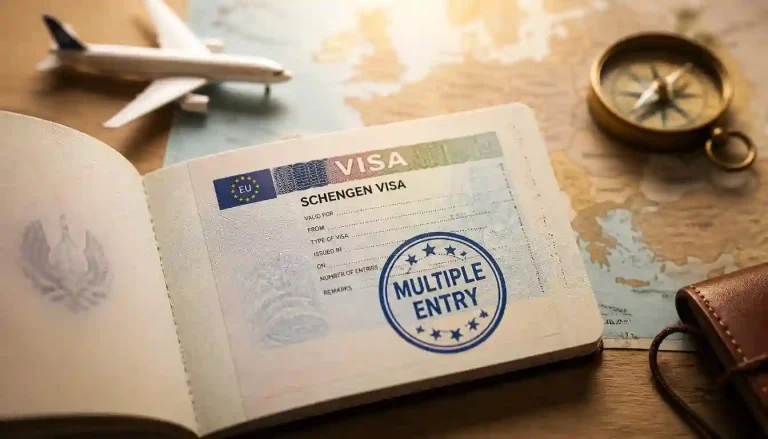
Schengen Multiple Entry Visa Cascade Rule Explained: Unlock Your 5-Year Visa
Applying for a European visa every few months is exhausting, time-consuming, and expensive. If you travel frequently to Europe for tourism or business, having the schengen multiple entry visa cascade rule explained clearly will completely change how you plan your trips.
The European Union created a clear, structured roadmap that lets genuine travelers unlock longer visa validity over time. Instead of leaving you guessing about consular decisions, this guide breaks down the exact legal steps to build your profile and secure multi-year access.
Quick Takeaway: The Schengen cascade rule is a 3-tier legal progression under EU Visa Code Article 24. It legally obliges consulates to grant extended validity (1-year, 2-year, or 5-year multiple entry visas) to travelers who have cleanly used their previous visas without overstaying.
The Schengen Multiple Entry Visa Cascade Rule Explained
The schengen visa cascade system is an official European Union framework designed to reward travelers who have a proven track record of respecting immigration rules.
Under the formal EU Visa Code, this legal mechanism is known as the cascade regime schengen visa. It is designed to automatically upgrade the validity of your visa based on your past lawful travel history.
Instead of applying for a fresh, single-entry visa for every holiday, the cascade system gradually moves you toward multi-year permits. If you are preparing your initial paperwork, review our comprehensive guide on how to get multiple entry schengen visa to understand the baseline embassy procedures.
The core objective of the EU cascade system is simple: reduce repetitive paperwork at crowded consulates while granting predictable, long-term travel freedom to reliable visitors.
How the Cascade Regime Works (Step-by-Step)
The cascade framework operates on a strict, progressive ladder. You cannot jump directly to a long-term permit without first proving your reliability through previous successful trips.
Each tier unlocked by the consular officer is directly tied to how lawfully you utilized your earlier visas without overstaying the 90/180-day rule.
The 1-Year Multiple Entry Visa
To qualify for the initial 1-year multiple entry permit, you must have obtained and lawfully used three individual Schengen visas within the previous two years.
Consular officers will verify that you entered and exited the Schengen zone strictly according to the validity dates stamped on your passport pages.
The 2-Year Multiple Entry Visa
Once you complete the first milestone, the second tier becomes accessible. You qualify for a 2-year multiple entry visa if you have lawfully used a 1-year multiple entry visa within the previous two years.
During this stage, visa officers check whether your travel frequency remains consistent and your financial standing continues to support regular visits.
The 5-Year Multiple Entry Schengen Visa Rules
The final tier of the cascade system grants you maximum travel flexibility. Under official 5 year multiple entry schengen visa rules, you qualify after lawfully using a 2-year multiple entry visa within the previous three years.
Securing this five-year sticker eliminates the need for repeated consulate visits. If you are preparing an application for this tier, review our dedicated guide on how to apply for 5 year multiple entry schengen visa to avoid common documentation gaps.
Always remember that even with a five-year visa, your passport validity must extend at least three months beyond your intended final departure date.
Does the Cascade Carry Over Between Different Schengen Countries?
Yes. This is where most travelers get confused. Your previous visas do not need to come from the exact same country.
As long as your prior visas were issued by any Schengen member state and lawfully used, the new embassy is legally bound to consider your full travel history under the cascade regime.
Eligibility: Who Qualifies for the New Schengen Visa Rules?
Meeting the eligibility criteria under the new schengen visa rules for multiple entry requires more than just submitting an application form. Consulates evaluate your overall travel credibility.
Your travel history must be completely clean. Any previous visa refusal, overstaying, or unauthorized employment anywhere in the Schengen area will immediately disqualify you from the cascade progression.
Sufficient passport validity is equally essential. Because a multi-year visa cannot exceed the physical expiration date of your passport, you must hold a document with plenty of unused pages and extended validity.
Finally, you must demonstrate consistent financial stability. Consular officers want to see steady income sources showing you can fund frequent European travel without relying on public funds.
Required Documents to Get a Multiple Entry Schengen Visa
When applying under the cascade framework, you must submit standard tourist visa paperwork alongside extra evidence that justifies your need for multiple entries.
To maximize your approval chances, include these specific supporting documents in your application file:
- Detailed Cover Letter: Clearly explain why you require multi-entry access, outlining your planned trips, business commitments, or family visits across Europe over the coming year.
- Copies of Previous Schengen Visas: Attach clear photocopies of all Schengen visas issued within the past three years, including entry and exit border control stamps.
- Multi-Trip Travel Insurance: Provide an international travel insurance policy that explicitly confirms coverage for multiple trips with a minimum medical coverage of €30,000.
- Proof of Continued Economic Ties: Submit long-term employment contracts, business registration licenses, or ongoing property ownership records to prove strong ties to your home country.
The Field 24 Rule on Your Application Form:
Meeting the criteria is useless if you fail to explicitly request multi-entry status on your application form.
In Field 24 (Number of entries requested), always tick “Multiple entries.” In your cover letter, write one clear sentence: “I am requesting multiple entries in accordance with the mandatory cascade regime under Article 24 of the EU Visa Code.” This small sentence instantly alerts the visa officer to evaluate your historical eligibility.
The 90/180 Day Rule: Schengen Multiple Entry Visa Cascade Rule Explained
Understanding the cascade system is completely useless if you do not master the strict 90/180-day rule. It operates on a continuous “rolling” window, not a fixed calendar year.
This means on any given day you spend in Europe, you must count backward 180 days to ensure your total stays have not exceeded 90 days. Miscalculating this can instantly ruin your cascade eligibility.
The 59-Month Biometric Advantage
One major hidden benefit of the cascade progression is the Visa Information System (VIS) fingerprint rule. Your biometrics remain valid across all Schengen states for exactly 59 months.
As you successfully climb the cascade ladder from 1-year to 5-year visas, you often skip the embassy queue entirely and submit renewal applications via mail or a representative.
Only “Type C” Visas Count
Do not make the mistake of counting every European stamp in your passport. The cascade regime strictly applies only to short-stay Type C visas.
If you previously held a long-stay national visa (Type D), a student visa, or an Airport Transit Visa, they legally do not count toward unlocking your 1, 2, or 5-year multiple entry status.
The “Purpose of Travel” Trap
Consulates prefer consistency in your travel profile. If your previous three visas were strictly sponsored for corporate business, suddenly applying for a multi-year tourist visa might disrupt your cascade momentum.
If you must switch your primary travel purpose, clearly explain the transition in your cover letter. This prevents the officer from doubting your core intent and downgrading your visa length.
Exceptions and Country-Specific Updates
While the standard cascade regime applies globally, the European Commission occasionally introduces tailored, fast-track rules for specific nationalities to boost mobility.
For example, a landmark update for Indian nationals residing in India was officially adopted in April 2024. Under this specific agreement, eligible Indian applicants can bypass the standard one-year tier entirely.
They can immediately secure a two-year multiple entry visa after lawfully using just two Schengen visas within the previous three years. This two-year sticker is then directly followed by a five-year visa.
However, remember that the cascade system creates eligibility, not an automatic right. Consular officers retain full authority to override the rule and issue a shorter visa if your passport is expiring soon or if your current financial documents appear weak.
Single-Entry vs. Multiple-Entry Cascade Visa
Understanding the exact difference between a standard visa and a cascade multiple-entry visa (MEV) is crucial before you book your flights.
| Visa Feature | Standard Single-Entry Visa | Cascade Multiple-Entry Visa (MEV) |
|---|---|---|
| Validity Period | Exact dates of your planned trip | 1 to 5 years continuously |
| Max Stay Limit | Up to 90 days (as printed on sticker) | 90 days within any 180-day period |
| Entry Rules | Expires immediately after exiting the zone | Unlimited entries within validity period |
| Application Process | Must apply fresh for every single trip | One application covers years of travel |
FAQs
Does a 5-year multiple entry visa allow me to stay in Europe for 5 years?
No. This is the most common misunderstanding among travelers. A 5-year validity simply means you do not need to apply for a new visa for five years. You are still strictly bound by the standard 90/180-day rule, meaning you can never stay more than 90 days within any 180-day window.
Do I always have to enter through the country that issued my multiple entry visa?
For your very first trip on the new visa, it is highly recommended to enter or spend the majority of your time in the issuing country. For subsequent trips over the coming years, you can cross any Schengen border directly without visiting the issuing country again.
Can I skip the cascade steps and get a 5-year visa directly?
Generally, no. The cascade system is designed as a strict step-by-step progression. However, under exceptional circumstances, consular officers have discretionary power to issue a direct 5-year visa if you can prove an urgent, frequent, and highly legitimate business need.
What happens if I overstay or break the rules on a previous visa?
If you violate the 90-day limit, work illegally, or fail to leave before your visa expires, it is no longer considered “lawfully used”. This completely voids your eligibility for the cascade progression, and you will likely face denials for future applications.
Will my multiple entry visa remain valid if my passport expires?
A Schengen visa can never legally exceed your passport’s expiration date. It must expire at least three months before your passport expires. If your current passport is expiring soon, you must renew it before applying for a long-term cascade tier.
Sources & References
To ensure absolute accuracy and maintain editorial trust, the legal frameworks and cascade rules detailed in this article are verified directly from official European Union portals:
- European Commission – Official Schengen Visa Policy
- Official EU Visa Code (Regulation EC No 810/2009) – Article 24