Documents Required for Canada Super Visa for Parents: Complete Checklist
Bringing your parents or grandparents to Canada is a beautiful family milestone. But let’s be honest—the paperwork can feel incredibly overwhelming. A single missing paper or a slight miscalculation in your income can cause a heartbreaking refusal.
A Canada Super Visa is a fantastic option. It allows eligible parents to visit their family and stay for up to 5 years at a time. Plus, it comes with multiple entries valid for up to 10 years.
However, IRCC (Immigration, Refugees and Citizenship Canada) is strictly unforgiving when it comes to rules. To get an approval, you must submit a flawless application. Gathering the exact documents required for canada super visa for parents is your most important step. It proves your financial capability as a host and their genuine intent to visit.
Quick Key Takeaways:
- Income Rule: The Canadian host must meet the minimum income limit based on total family size. For 2026, it starts at CAD $30,526 for one person.
- Mandatory Insurance: Parents need private medical insurance of at least CAD $100,000. It must be valid for one full year from the date of entry.
- New 2026 Update: Since March 31, 2026, hosts can use the stronger income from either of their two most recent tax years.
- Application Cost: The visa fee is CAD $100 per person, plus a CAD $85 biometrics fee (if required).
Super Visa vs. Regular Visitor Visa: Which is Right for Your Parents?
Many applicants get confused between a standard visitor visa and a Super Visa. If you are wondering which one to apply for, here is a quick comparison to help you decide:
| Feature | Super Visa | Regular Visitor Visa |
|---|---|---|
| Max Stay Per Entry | Up to 5 Years | Up to 6 Months |
| Host Income Test | Mandatory (Strict LICO test) | Not strictly required |
| Medical Insurance | Mandatory $100,000 upfront | Recommended, but not legally required |
Documents Required for Canada Super Visa for Parents: Step-by-Step Checklist
The required documents fall into two main groups: papers from your parents (the applicants) and financial documents from you (the Canadian host). Always prepare these documents clearly before starting the online application.
Here is the ultimate checklist for 2026:
1. Documents Required from Parents (The Applicants)
These are the personal and travel documents your parents must prepare from their home country:
- Valid Passport: Must be valid for the intended duration of the stay.
Pro Tip (The Expiry Trap): A Super Visa cannot outlive the passport. If your parent’s passport expires in 2 years, IRCC will only issue a 2-year visa. Renew the passport before applying to get the full 10-year validity benefit! - Proof of relationship for super visa: You need official proof that they are your parents. A birth certificate or baptismal certificate naming them as your parents is perfect.
- Super Visa Medical Insurance: Proof of a valid insurance policy. It must clearly show the insured person’s name, coverage amount, and effective dates.
- Digital Photo: Must strictly meet Canada’s visa photo size specifications.
- Biometrics Receipt: Usually required after submitting the application and paying the fees.
- Certified Translations: If your parents are applying from countries like Bangladesh, all local documents (like a Bengali birth certificate) must be translated into English or French by a certified translator.
The “Hidden” Document: A Cover Letter from the Parents
- Everyone focuses on the host’s invitation letter, but the parents should also write a 1-page Purpose of Travel Letter.
- They should explain in their own words why they are visiting (e.g., to see a newborn grandchild or celebrate a 60th birthday).
- More importantly, they must state their exact plans to return home. For example: “I must return to my home country by December because I need to manage my rental properties and attend to my medical clinic.” This builds massive trust with the visa officer.
Upfront Medical Exam (IME) Protocol:
- Do not wait for IRCC to request it. Complete an upfront medical exam before submitting your file.
- You cannot use your regular family doctor. You must strictly visit an official IRCC-approved Panel Physician.
- The doctor will give you an eMedical Information Sheet. Upload this tracking receipt with your application.
- Medical results are valid for exactly 12 months.
2. Documents Required from the Host (Child/Grandchild in Canada)
As the host, you bear the financial responsibility. You must submit rock-solid proof of your legal status and income:
- Proof of Status: A copy of your Canadian Citizenship card, Permanent Resident (PR) card, or Registered Indian status.
- Signed Invitation Letter: A formal letter promising complete financial support for your parents during their stay.
- Primary Proof of Income: Your official CRA Notice of Assessment (NOA) for the qualifying tax year.
- Alternative Income Proof: If NOA is not available, you can submit T4/T1 slips, pay stubs for the last 12 months, an Employment Letter (stating salary and job duties), or bank statements showing regular deposits.
- Co-Signer Documents (If needed): Need to combine income? Only your legal spouse or common-law partner can act as a co-signer. Siblings, parents, or adult children cannot co-sign. You must include their NOA and income proof as well.
Super Visa Income Requirements 2026 (LICO)
Meeting the income cutoff is the single biggest hurdle for most hosts. IRCC sets a strict threshold based on the Low Income Cut-Off (LICO).
If your declared gross income falls even CAD $1 below this threshold, the visa officer must refuse the file by law. Meeting the minimum income for canada super visa is non-negotiable.
Who Counts in Your Household Size? (The Math Trap)
Most refusals happen because hosts miscalculate their household size. It is not just the people living under your roof right now.
You must include:
- Yourself (the host child or grandchild).
- Your spouse or common-law partner (even if separated).
- Every dependent child (regardless of custody or child-support agreements).
- The invited parents or grandparents (count 2 if inviting both).
- Anyone previously approved under a Super Visa invitation signed by you or your spouse, if their visit period is still active.
- Anyone you or your co-signer previously sponsored under an ongoing sponsorship undertaking.
Real-Life Math Example:
A daughter invites both her parents. She lives with her husband and 2 kids. Her husband is already hosting his own parents on an active Super Visa invitation.
Count: Daughter (1) + Husband (1) + Children (2) + Invited Parents (2) + In-laws already hosted (2) = 8 people.
Required gross income: CAD $89,008.
Official 2026 Income Threshold Table
| Family Size (Including Applicants) | Minimum Gross Annual Income (CAD) |
|---|---|
| 1 person | $30,526 |
| 2 people | $38,002 |
| 3 people | $46,720 |
| 4 people | $56,724 |
| 5 people | $64,336 |
| 6 people | $72,560 |
| 7 people | $80,784 |
| Each additional person over 7 | Add $8,224 |
Two Key Updates for Qualifying Income
- Two Tax Years Option: You can pick the stronger income figure from either of the two most recent tax years prior to your application date.
- The 75% Rule & Parents’ Income: If the host makes at least 75% of the required LICO, the visiting parent’s verified Canadian income can make up the rest. Foreign earnings abroad do not count.
The Co-Signer and Bank Balance Trap
Do not confuse a high bank balance with “income.” IRCC does not care if you have $100,000 sitting in your savings account. They strictly look at your qualifying CRA-assessed income (what you actually earned and paid taxes on).
Also, if you need a co-signer to meet the income threshold, remember that only your legal spouse or common-law partner can co-sign. You cannot use the income of your siblings, parents, or adult children living with you.
Super Visa Insurance Requirements
Medical insurance is not just another checkmark on your list. It is an absolute legal prerequisite under IRCC rules.
A routine emergency room visit in Canada can easily cost thousands of dollars out of pocket. To protect families and public healthcare, Canada requires a robust super visa insurance requirements policy before your parents board their flight.
Pre-Existing Conditions and Visa Refusal Refunds
Read the fine print of your insurance policy carefully. A policy with a blanket exclusion for “unstable pre-existing conditions” might leave you stranded if a medical emergency happens. Make sure the coverage actually protects your parents.
What if the visa gets refused? IRCC does not guarantee refunds. Refundability is strictly a private contract matter between you and the insurance broker. Before buying, always get written confirmation that they will fully refund your money (minus minimal admin fees) if the Super Visa is rejected.
Mandatory Insurance Rules You Cannot Skip
- Coverage Amount: Must provide at least CAD $100,000 in emergency medical coverage.
- Duration: Must be valid for at least 365 days (one full year) starting from the date of arrival in Canada.
- Essential Benefits: The policy must explicitly cover basic healthcare, emergency hospitalization, and repatriation (bringing the patient back home in case of severe illness or passing).
- Payment Status: The policy must be fully paid upfront or purchased under an approved monthly installment plan with an initial deposit. An unpaid quote or draft application will trigger an immediate refusal.
Who Can Issue the Policy?
Not all insurance companies qualify. Your policy must come from:
- A licensed Canadian insurance provider, or
- A foreign insurance company specifically authorized by OSFI (Office of the Superintendent of Financial Institutions) under the Insurance Companies Act, operating business in Canada.
The OSFI & Underwriter Rule:
- Your policy document must show the actual Underwriter or Insurer’s name. Travel brokers or agents are not insurance companies.
- If using a foreign insurance company, they must be federally approved by OSFI (Office of the Superintendent of Financial Institutions).
- A foreign policy must explicitly state: “Issued while doing insurance business in Canada.” Without this line, the caseworker will reject the policy.
Pitfall to Avoid: Never buy a cheap travel policy with unstable pre-existing condition exclusions, hidden waiting periods, or missing repatriation coverage. Also, confirm the insurer’s refund policy—if the visa is refused, you will need a written agreement guaranteeing a full refund minus minimal admin fees.
Super Visa Invitation Letter Sample
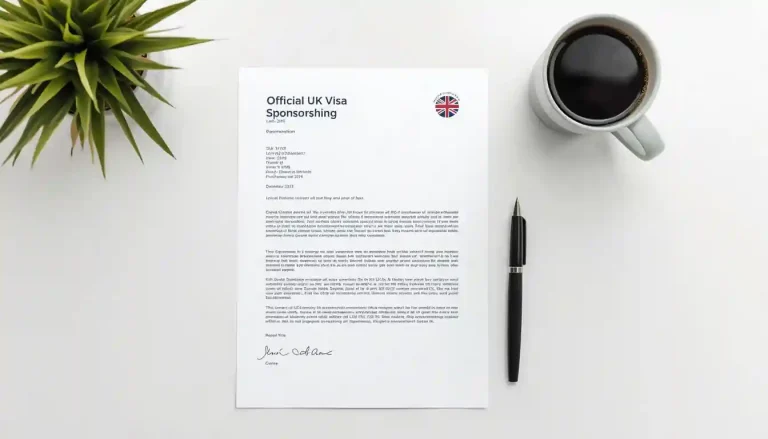
Your invitation letter is a binding personal commitment. It explains to the immigration officer that you have the home space, financial stability, and genuine desire to host your parents.
Legal Invitation Letter Checklist:
- Do not just write your parents’ names. Your letter must clearly list your entire household size (names, birth dates, and relationships).
- Always attach your proof of status (PR card or Citizenship certificate) with the letter.
- Ensure you physically sign the letter. An unsigned typed document is not legally valid for IRCC.
Copy the template below, update the bracketed details [ ] with your personal information, print, and sign it before uploading:
[Current Date]
Immigration, Refugees and Citizenship Canada (IRCC)
Government of Canada
Subject: Formal Invitation Letter for Parent Super Visa Application
Dear Visa Officer,
I, [Host Full Name], am a [Canadian Citizen / Permanent Resident] currently residing at [Full Canadian Residential Address]. My date of birth is [DD/MM/YYYY], contact number is [Phone Number], and email is [Email Address].
I am formally inviting my [mother / father / parents], [Parent Full Name], date of birth [DD/MM/YYYY], passport number [Passport Number], to visit me in Canada under the Parent and Grandparent Super Visa program.
Relationship & Purpose of Visit:
[Parent Full Name] is my biological [mother / father]. Our relationship is confirmed by the attached copy of my [birth certificate / relationship document]. The primary purpose of this visit is family reunification and spending quality time together.
Financial Undertaking:
I formally confirm that I will provide full financial support for my [parents / mother / father] throughout their stay in Canada. My household income comfortably exceeds the required Low Income Cut-Off (LICO) for our family size. To verify this, I have attached my CRA Notice of Assessment, T4 slips, employment confirmation letter, and recent pay stubs.
Accommodation & Medical Insurance:
My parents will reside with me at my address stated above. The accommodation offers sufficient private space and fully complies with local housing standards. Furthermore, I have purchased a qualifying medical insurance policy providing CAD $100,000 emergency coverage for one full year, fully meeting IRCC requirements.
I respectfully request that you look favorably upon this application and issue the Super Visa.
Yours sincerely,
[Host Signature]
[Host Full Name]
[Full Canadian Address]
[Phone Number]
[Email Address]
Super Visa Processing Time & Application Fees
The government fees for the application are actually the cheapest part of the entire process. The real costs lie in the medical exam and the insurance policy.
Here is a quick breakdown of the official IRCC fees for 2026:
| Fee Type | Cost (CAD) |
|---|---|
| Super Visa Application Fee | $100 per person |
| Biometrics Fee (If applicable) | $85 per person (Max $170 per family) |
| Medical Exam (IME) | Varies by panel physician |
Processing Time: It varies heavily depending on the applicant’s home country. For example, as of 2026, applications from India take around 169 days, while from the Philippines it takes about 97 days. Always check the live IRCC processing time tool before booking any flights.
Port of Entry (POE) Reality: A 5-Year Stay is Not Guaranteed
Here is a harsh reality. Getting the visa stamped in your parents’ passport does not automatically guarantee a 5-year stay. The CBSA (Canada Border Services Agency) officer at the airport makes the final decision.
| POE Requirement | Safe Document (Hand Luggage) | Border Risk / Shorter Stay Trigger |
|---|---|---|
| Medical Insurance | Printed 1-year policy active on arrival date ($100k coverage). | Policy not yet active, expiring soon, or kept inside checked baggage. |
| Host Financials | Copy of host’s signed invitation letter, PR/Passport, and NOA. | No host contact details or inability to explain living arrangements. |
| Intent to Return | Return flight itinerary, home property papers, or leave letter. | Officer doubts intent to leave; stamps for 6 months instead of 5 years. |
Real-Life Airport Experience: Facing the CBSA Officer
Getting the visa stamp in the passport is only half the battle. When your parents land at a Canadian airport (like Toronto Pearson or Vancouver), they must face a Canada Border Services Agency (CBSA) officer.
Here is what actually happens at the primary inspection kiosk:
- The Interrogation: The officer will ask why they are visiting and how long they plan to stay. If your parents say “I am here to live with my son forever” instead of “I am here for a temporary family visit,” they might be denied entry.
- The Hand Luggage Rule: The officer will ask to see the $100,000 medical insurance policy. If your parents packed it in their checked luggage, they cannot go back to get it. Always keep printed copies in the hand luggage!
- The Return Ticket Myth: A return ticket is not legally required for a 5-year Super Visa. However, having a one-way ticket often triggers extra questioning. Be prepared to explain how the return flight will be funded.
To ensure smooth entry, your parents must carry these documents in their hand luggage:
- A valid passport with the Super Visa.
- A printed copy of their active $100,000 medical insurance policy.
- The host’s invitation letter and Proof of Accommodation.
- Evidence of ties to their home country, such as an employer’s No Objection Certificate (NOC) or property papers.
Travel Warning: If your parents are booking flights with layovers in Europe, check the routing carefully. Ensure they don’t accidentally book a double-stop in Europe that requires a separate Schengen Visa just to transit.
When Will an Officer Grant Less Than 5 Years?
Even with a valid visa, the border officer might restrict the stay to just 6 months or 1 year. This usually happens if:
- The medical insurance policy is close to expiring or doesn’t cover the full intended period.
- The officer doubts the parent is a genuine visitor who will leave voluntarily.
- The supporting documents do not match the declared entry date. If your parents receive a shorter stay, they don’t necessarily have to leave immediately. They can apply for a visitor record extension from inside Canada before their authorized period ends, provided they buy new insurance.
Top Real-Life Refusal Traps
Why do Super Visa applications get rejected? Avoid these common mistakes:
Family-Size Miscalculation: Forgetting to count a separated spouse, a child living elsewhere, or an active previous sponsorship undertaking.
Invalid Income Sources: A high bank balance does not count as income. You must show qualifying CRA-assessed income (like an NOA).
Flawed Insurance Policies: Submitting unpaid quotes, missing repatriation coverage, or using non-OSFI foreign insurers.
Weak Home Country Ties: Failing to prove your parents have strong reasons to return home (like property, other children, or business).
How to Actually Prove “Strong Ties to Home Country”
Many applicants think submitting a piece of land paper (property deed) is enough. It is not. The visa officer wants to see active reasons why your parents must return home.
To build a bulletproof application, include these documents:
- Active Employment: A formal “No Objection Certificate” (NOC) or leave approval letter from their current employer.
- Family Obligations: An affidavit or proof showing they are caring for another dependent child, or an elderly relative back home.
- Financial Assets: Proof of active business ownership, running bank transactions, or monthly pension payments.
Documentation Errors: Uploading local documents without certified English/French translations, or leaving the invitation letter unsigned.
Bangladesh-Specific Practical Checklist
If your parents are applying from Bangladesh, keep these regional requirements in mind to avoid sudden processing delays:
- Approved Panel Physicians: You cannot use your regular family doctor for the medical exam (IME). In Bangladesh, IRCC-approved panel physicians are mostly located in Dhaka (and some in Sylhet/Chattogram). Book the appointment well in advance.
- Certified Translations: Almost all local documents (like a Bengali birth certificate, national ID, or property deeds) must be translated into English or French. Use a certified translator. If a certified translator is not available, you must provide a signed affidavit along with the translation.
- Hand Luggage Rule: When your parents fly out of Dhaka (HSIA), make sure they carry the printed insurance certificate, your invitation letter, and proof of funds in their hand luggage. Never put these inside checked baggage, as the CBSA officer in Canada will ask to see them before they can collect their bags.
What to Do If Your Super Visa is Refused? (Reapply vs. Judicial Review)
If you receive a refusal letter, do not panic. Most applicants immediately submit a new application. But if the immigration officer made a mistake, reapplying might not be the best move.
You have two real options:
- Option 1: Reapply with new evidence. If your first application was weak (e.g., missing documents or a miscalculated income), fix the mistakes and apply again.
- Option 2: Apply for Judicial Review. What if your income was perfect, your insurance was valid, but the officer still refused it? You can challenge the decision in the Federal Court of Canada. If the judge finds the officer’s decision unreasonable or unfair, your file will be reopened and reviewed by a different officer. You have 60 days to file for a Judicial Review if applying from outside Canada.
Warning: Never use fake bank statements or hide previous visa refusals (even from the USA or UK). If caught, this is treated as “Misrepresentation,” resulting in a strict 5 to 10-year ban from entering Canada.
The Ultimate Secret: Always Order GCMS Notes After a Refusal
If your parents’ visa is rejected, the IRCC refusal letter will look very generic. It usually just has a checked box saying, “Not satisfied with ties to home country.”
Do not guess the reason! Before you spend money to reapply, you must order the GCMS (Global Case Management System) notes.
- What are they? These notes contain the exact, unedited comments typed by the specific immigration officer who reviewed your file.
- Why it matters: It tells you exactly why they said no. Did they doubt your income? Did they find a gap in the insurance? Once you know the exact secret reason, you can easily fix it in your second application. (It only costs CAD $5 to request these notes under the Privacy Act).
FAQs
Do my parents need to show bank statements if I am paying for everything?
Yes. Even if you (the Canadian host) are bearing 100% of the expenses, your parents should still submit their own bank statements or property documents. It proves they are financially stable in their home country, which strongly supports their intent to return.
Does the Super Visa invitation letter need to be notarized?
No, IRCC does not legally require the invitation letter to be notarized. A standard typed letter with your physical signature is perfectly acceptable. Just make sure to attach your PR card or Citizenship certificate with it.
Can my brother and I combine our incomes to meet the Super Visa threshold?
No. Under IRCC rules, siblings cannot combine their incomes to invite parents. Only your legal spouse or common-law partner can act as a co-signer to help you meet the LICO requirement.
Do I need to buy confirmed flight tickets before applying?
No. IRCC strongly advises against buying confirmed, non-refundable flight tickets before your visa is approved. You can simply submit a proposed flight itinerary to show their intended travel dates.
If my parents leave Canada and return a year later, do they need new insurance?
Yes. The insurance rule applies to every single entry. Whenever your parents re-enter Canada on their Super Visa, they must show the border officer a new, valid insurance policy covering CAD $100,000 for one full year from that exact date of re-entry.
Can my parents apply for a Super Visa if their PR application is already processing?
Yes. Under Canada’s “Dual Intent” rule, your parents can apply for a Super Visa while waiting for their PR. They just must convince the visa officer that they will legally leave Canada when their visa expires, even if the PR is delayed or refused.
Final Thoughts Before You Apply
Bringing your family together in Canada is worth every bit of the paperwork effort. By perfectly organizing all the documents required for Canada super visa for parents, you can confidently submit your application and avoid heartbreaking refusals.
For a broader overview of the exact eligibility rules, minimum income thresholds, and complete processing steps, be sure to read our full guide on Canada Super Visa Requirements for Parents. Take your time, prepare well, and get ready to welcome them home!
Official Immigration Guidance & Legal Sources
To ensure absolute transparency and accuracy, all information in this checklist is verified against official Government of Canada regulations:
- IRCC Super Visa Overview – Official Government of Canada guidelines and eligibility criteria.
- LICO Income Requirements – Official Super Visa Low Income Cut-Off table for the qualifying tax year.
- Medical Insurance for Super Visa – Mandatory OSFI-approved insurance criteria and coverage regulations.