Canada Super Visa Income Requirements & LICO Table 2026
Inviting your parents or grandparents to Canada should be an exciting milestone, not a stressful math exam. Yet, proving you have enough money to support their stay is often the biggest hurdle for hosts.
If you are preparing an application, mastering the exact canada super visa income requirements lico table is non-negotiable. The government needs absolute proof that your household can comfortably cover their living expenses without relying on public funds.
(Note: Before diving deep into the financial calculations below, make sure you understand the complete application process by reviewing our main pillar guide on Canada Super Visa Requirements for Parents.)
What is the LICO Table for Canada Super Visa?
LICO stands for Low Income Cut-Off. It is a financial benchmark established by Statistics Canada to determine the income level at which a family is likely to struggle with basic living costs.
Because a Super Visa allows your parents to stay in Canada for up to five continuous years per visit, IRCC uses this exact benchmark to evaluate your financial stability. They need a guarantee that you can support your visitors.
To act as the official host and financial sponsor, you must be the child or grandchild of the visiting parents. You also need to be a Canadian citizen, a permanent resident, or a registered Indian. The required minimum income you need to prove is not a fixed number—it increases directly based on the total number of people in your current family unit.
Official Canada Super Visa Income Requirements LICO Table (2026 Update)
Here is the current lico table 2026 canada sponsors must use to verify their eligibility. These numbers represent the minimum necessary gross income in Canadian dollars (CAD):
| Family Unit Size | Minimum Gross Income Required (CAD) |
|---|---|
| 1 person (the host) | $30,526 |
| 2 persons | $38,002 |
| 3 persons | $46,720 |
| 4 persons | $56,724 |
| 5 persons | $64,336 |
| 6 persons | $72,560 |
| 7 persons | $80,784 |
| Each additional person above 7 | Add $8,224 |
Important clarification: Do not confuse the Super Visa with the permanent Parent and Grandparent Program (PGP). The PGP requires LICO plus 30% over three consecutive tax years. For the Super Visa, you only need to meet the standard 100% LICO threshold shown above.
What Changed in the Assessment Rules?
IRCC introduced significant updates to make qualifying much more accessible:
- The Two-Year Window: You or your co-signer can now qualify using either of the two taxation years immediately before you apply. If your most recent tax year was financially slower, a stronger preceding year can still get your file approved.
- Parent Income Top-Up (Option 2): Under current operational guidelines, if the host (and co-signer) covers at least 75% of the required minimum income, the visiting parents can use their own verified foreign pensions, remote earnings, or rental income to cover the remaining gap (up to 25%).
How to Calculate LICO for Super Visa (Step-by-Step)
If you are figuring out how to calculate lico for super visa approval, the most common pitfall is miscounting your household size. A single missing person on paper can push your required threshold higher than your reported earnings, triggering a swift refusal.
Step 1: Count Your Family Unit Correctly
You must include all of the following individuals:
- You (the primary host).
- Your spouse or common-law partner (regardless of whether they co-sign).
- Your dependent children: Children under age 22 who are not married. (Children aged 22 or older are only counted if they have continuously depended on you due to a physical or mental condition).
- The parents or grandparents you are inviting.
- Active prior sponsorships: Anyone you (or a co-signing spouse) previously sponsored under a Family Class or refugee undertaking that is still legally binding, along with their family members.
- Valid previous Super Visa guests: Any parent or grandparent currently holding a valid Super Visa from a previous invitation you provided.
Pro Tip: Two Family Count Traps to Avoid
- Custody Rules: If you are divorced, you must still count your dependent children in your family size, regardless of your current custody arrangements.
- Spouse’s Past Sponsorships: If your spouse is not officially co-signing this application, their past sponsorship undertakings do not increase your family size.
Step 2: Practical Calculation Example
Let’s look at a realistic scenario:
- Priya lives in Toronto with her husband and one dependent toddler (3 people).
- She wants to invite both of her parents from abroad (2 people).
- Neither Priya nor her husband has any active past sponsorship undertakings.
Total Family Size: 3 + 2 = 5 persons.
Looking at the table above, Priya’s household must prove a minimum gross income of $64,336 CAD.
If Priya were only inviting her mother, her family unit would be 4 persons, lowering the required baseline to $56,724 CAD.
Required Documents for Canada Super Visa Financial Requirements
Paperwork is where many applications fall apart. To successfully satisfy the canada super visa financial requirements, the IRCC strongly prefers your official Notice of Assessment (NOA) issued by the Canada Revenue Agency (CRA).
However, real life is messy. Depending on your exact employment situation, here is a quick checklist of the exact documents you should submit:
The Invitation Letter Declaration Rule
Documentation is only half the battle; how you present it in your formal invitation letter matters just as much.
| Financial Summary (For Visa Officer) | Amount (CAD) |
|---|---|
| Required LICO (e.g., Family of 4) | $56,724 |
| Host Income (2025 NOA) | $60,000 |
| Co-Signer Income (2025 NOA) | $0 |
| Total Verified Income | $60,000 |
| Surplus Amount | +$3,276 |
IRCC officers cross-reference your household count directly against your letter. Your invitation letter must explicitly list:
- The full legal name and date of birth of every single person in your household unit (including yourself, spouse, children, and visitors).
- The specific person whose income is being used to qualify (primary host, co-signer, or visiting parents under Option 2).
- A clear, bulleted breakdown of which tax and bank documents correspond to each earning contributor.
The Standard Employee Checklist
If you work a regular job, your NOA is the gold standard. But if you do not have it, you must provide multiple supporting documents to build trust:
- Your T4 or T1 slips for the most recent tax year.
- Pay stubs covering the last 12 consecutive months.
- An original employment letter stating your job title, job description, and exact salary.
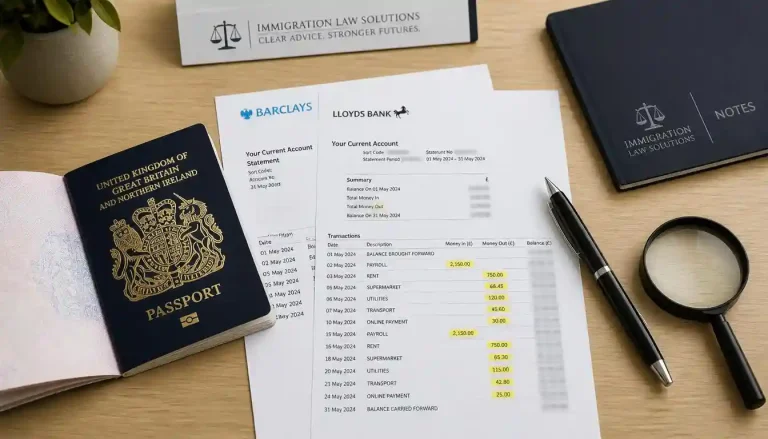
- Bank statements from the last calendar year clearly showing your regular payroll deposits.
Applying Early in the Year (January to April)
If you apply in the spring before you have filed your latest taxes or received your new NOA, do not panic. The rules allow you to qualify using either of the two tax years immediately preceding your application.
If you must use your current unfiled year, you will need to submit your latest T4 slips and 12 months of pay stubs to prove your ongoing income is stable.
The Self-Employed Reality & “Line 15000”
You might read on internet forums that visa officers only look at “Line 15000” (Gross Income). While Line 15000 is the strict rule for permanent parent sponsorships (PGP), the Super Visa manual evaluates your overall financial health.
If you are a freelancer or business owner, officers will not automatically add your business deductions (write-offs) back to your net income.
You cannot just show your gross billings. You must present your filed T1, business bank statements, and clear records that reconcile your gross receipts against your expenses so the officer understands your true available cash flow.
The Invitation Letter Declaration Rule
Documentation is only half the battle; how you present it in your formal invitation letter matters just as much.
IRCC officers cross-reference your household count directly against your letter. Your invitation letter must explicitly list:
- The full legal name and date of birth of every single person in your household unit (including yourself, spouse, children, and visitors).
- The specific person whose income is being used to qualify (primary host, co-signer, or visiting parents under Option 2).
- A clear, bulleted breakdown of which tax and bank documents correspond to each earning contributor.
What If You Don’t Meet the Super Visa Minimum Income 2026?
Realizing your income is slightly below the required threshold can be heartbreaking. But before you give up, there are three legal ways to hit the super visa minimum income 2026 target:
1. Add a Legal Co-Signer
You can combine your income with a co-signer. However, IRCC rules are incredibly strict here: only your legal spouse or common-law partner can co-sign. They must also be a Canadian citizen, permanent resident, or registered Indian. Your siblings, aunts, or even your Canadian-born adult children cannot legally act as a co-signer to boost your numbers.
2. Choose the Better Tax Year
Under the updated rules, you are not forced to use only your last tax year. If you had a weak financial year recently but a very strong year before that, you can submit the NOA from the stronger of the two previous taxation years to qualify.
3. The 75/25 Parent Top-Up Rule
If you and your spouse still fall short, the new March 2026 rules offer a massive lifeline. If the host (you and your co-signer) can prove you meet at least 75% of the minimum necessary income, your visiting parents can use their own verified income—like foreign pensions, rental properties, or remote work salaries—to cover the remaining 25% gap.
Real-Life Financial Refusal Risks (Section A39)
Meeting the exact dollar amount in the LICO table does not guarantee automatic approval. Under Section A39 of the Immigration and Refugee Protection Act (IRPA), visa officers must be convinced that the family will not become financially dependent on Canadian social assistance.
Here are the three most common financial traps that trigger unexpected refusals:
1. Relying Solely on a New Job Offer Letter
A common mistake is submitting an offer letter showing a high future salary when you just started a job. While an employer letter is officially accepted under Option 2, officers want to see a reliable 12-month track record.
An unverified salary letter without matching bank deposits or consecutive pay stubs creates an evidentiary weakness and often leads to refusal.
2. Over-Reliance on Employment Insurance (EI)
While regular EI benefits are not explicitly barred by name in the Super Visa manual (unlike PGP sponsorship), relying heavily on non-wage government benefits signals temporary cash flow issues.
If a large portion of your qualifying year comes from EI or emergency benefits, attach a cover letter explaining your current steady employment.
3. Ignoring the Visiting Parents’ Own Ties
A Super Visa is still a temporary resident visa. Even if your household income in Canada exceeds $100,000, your parents can still be refused if they appear to have zero financial stability back home.
The visa officer must be convinced they are genuine visitors who will return. Your Canadian income covers their living costs—it does not erase their need to show social or economic ties to their home country.
Success Story: The Two-Year Window Fix
The Problem: Rahul’s latest NOA was too low due to unpaid leave. His parents’ application was at risk of refusal.
The Solution: Under the new rules, he submitted his previous year’s NOA (which was well above LICO) along with his current 12 months of pay stubs to prove stability.
The Result: His parents received their Super Visa in just 8 weeks. This proves you don’t need a perfect current year if your financial history is strong.
FAQs
Can I show cash savings or a large bank balance instead of income?
No. Visa officers want to see a stable, ongoing income history, not a lump sum in the bank. A large savings account or sudden cash deposits cannot replace your official Notice of Assessment (NOA) or regular employment income.
What if my current NOA is lower than the required minimum income?
You have two great options. First, you can use the NOA from either of the last two tax years—just pick the stronger one. Second, if your current salary just increased, you can submit your latest T4 slips, an employment letter, and 12 months of pay stubs to prove it.
Can my visiting parents’ income count toward the Super Visa LICO requirement?
Yes! Under the new March 2026 rules, if you and your co-signer meet at least 75% of the requirement, your parents can cover the remaining 25%. They just need to provide official proof of their own ongoing income, like foreign pensions or remote work salaries.
My spouse is on a Work Permit. Can they co-sign?
No. A co-signer must be your legal spouse or common-law partner AND a Canadian citizen, permanent resident, or registered Indian. Spouses on a work permit or student visa cannot legally co-sign.
Do I need to show LICO plus 30% for a Super Visa?
No, that is a common myth. The “LICO plus 30%” rule only applies to the permanent Parent and Grandparent Program (PGP). For a Super Visa, you just need to meet the standard base LICO amounts shown in our table above.
Final Thoughts
Meeting the financial requirements for a Super Visa might seem terrifying at first glance. But honestly? It just boils down to basic math and gathering the right paperwork.
With the new flexible two-year window and the 75/25 parent income top-up rule, getting your application approved in 2026 is more achievable than ever.
Just remember the golden rules: count your family size accurately, rely on your official CRA documents, and never try to use sudden bank deposits to prove your income. Keep your paperwork clean, honest, and easy for the visa officer to understand.
Official Information & E-E-A-T Sources (H2)
To ensure the highest accuracy, the data and regulations mentioned in this guide are directly sourced from official Canadian government portals and legal frameworks:
- IRCC Official Portal – Super Visa Eligibility: The primary source for the latest minimum necessary income (LICO) tables and host requirements.
- Canada Revenue Agency (CRA) – Notice of Assessment: Official guidelines on how to access and understand your NOA and tax slips.
- Immigration and Refugee Protection Act (IRPA): Federal legislative texts covering financial inadmissibility (Section A39) and temporary resident regulations.