Schengen Visa Renewal Process & Rules (2026)
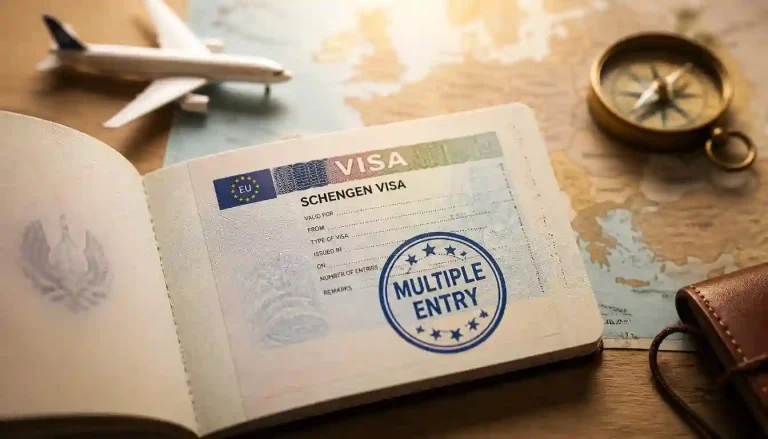
Many travelers search for the exact schengen visa renewal process after their 1-year or 2-year visa expires. But here is the legal truth: you cannot technically “renew” a standard short-stay Schengen visa.
Once your visa expires, the process resets. You must submit a completely fresh application. The consulate will assess your file from scratch.
However, if you want to know how to renew multiple entry schengen visa legally, the secret lies in the EU Visa Code’s “Cascade System.”
In this 2026 guide, we will break down the exact difference between reapplying and extending, the new EES digital tracking rules, and how to successfully get a longer visa on your next try.
Can You Actually Renew a Schengen Visa? (The Truth)
Let’s clear up the biggest confusion first. Renewal and extension are two completely different legal actions under European immigration law.
Renewal vs. Reapplication
When people talk about renewal, they actually mean reapplication.
| Feature | Reapplication (Standard “Renewal”) | Extension (Article 33) |
|---|---|---|
| Where to Apply | Consulate or visa centre in your home country. | Local immigration authority inside the Schengen area. |
| When to Apply | Before your new travel dates. | Before your current visa or stay expires. |
| Required Grounds | Normal entry conditions (Tourism, Business, etc.). | Force majeure, serious humanitarian reasons, or late entry. |
| Standard Fee | €90 (Adults), €45 (Children 6-12). | Free for force majeure/humanitarian grounds. |
| Final Outcome | A completely new visa sticker. | Longer validity added to your existing visa Under Regulation (EC) 810/2009, reapplication requires you to pay the standard €90 fee and submit fresh documents. Your previous travel history gives you a massive advantage, but it does not give you an automatic legal right to a new visa. An extension (under Article 33), on the other hand, is entirely different. You can only extend a visa if you are already inside the Schengen area and face a sudden, unavoidable emergency. How to renew multiple entry schengen visaSince a direct renewal does not exist, frequent travelers must rely on the “Cascade Rules” (Article 24 of the Visa Code) to maintain their travel access. This rule legally obliges consulates to issue progressively longer visas (1 year, then 2 years, then 5 years) to applicants with a clean track record. To step up this ladder, you must prove that you used your previous visas flawlessly. Keep your old passports and travel history ready. Keep in mind, since 2025, specific countries have custom cascade rules. For example, travelers from Indonesia can get a 5-year MEV after just one legally used visa. Meanwhile, Türkiye has a distinct 6-month to 5-year step system. Always check if your nationality falls under a special cascade agreement before applying. How to Extend Schengen Visa (Exceptions & Emergencies)Extending a visa while inside Europe is strictly reserved for genuine crises. You cannot extend your stay simply because you want a longer holiday or missed your flight due to personal delays. European immigration authorities grant extensions only under narrow, legal grounds: Force Majeure: Unforeseen external events that make leaving completely impossible, such as sudden airspace closures, natural disasters, or severe transportation strikes. Humanitarian Grounds: Serious medical emergencies where travel would risk your life, or the sudden critical illness or death of an immediate family member in Europe. Serious Personal Grounds: Rare and documented personal obligations that arose unexpectedly after your arrival. Some immigration offices charge an administrative fee for reviewing this ground. Late Entry: If you entered the Schengen area several days after your visa validity began, you can request an extension to use your remaining approved days. Crucial Rules for Requesting an ExtensionApply before expiry: You must submit your request to the foreign immigration office (Ausländerbehörde or local equivalent) before your current visa expires. An expired visa cannot be extended under any circumstances. Apply in your current country: Submit your request to the immigration office of the specific Schengen state where you are physically staying, even if another member state issued your original visa sticker. Show emergency proof: You must provide verifiable evidence, such as hospital admission records, police reports, or written confirmation from airlines, along with valid medical insurance covering the extra days. Step-by-Step Schengen Visa Renewal Process (Reapplying)When your prior visa has expired, securing a new one follows a structured reapplication process. If your main goal is figuring out exactly how to get multiple entry schengen visa for 1, 2, or 5 years, you need to follow a very specific strategy. Here is the exact step-by-step process to build a solid track record and secure that long-term approval without facing a downgrade. Step 1: Identify Your Primary DestinationYou must submit your file to the consulate of the country where you will spend the highest number of nights. If you plan equal time across multiple nations, apply through your country of first arrival. Step 2: Check National Cascade PrivilegesVerify whether your nationality qualifies for accelerated cascade rules under updated EU implementing decisions. This determines whether you are eligible for an immediate 1-year, 2-year, or 5-year validity. Step 3: Secure an Appointment EarlyBook your slot via the designated external service provider (such as VFS Global, BLS, or TLScontact). Demand surges before summer and major trade seasons, so secure your date well in advance. Step 4: Prepare Fresh DocumentationConsular officers evaluate your current situation. Never reuse old bank records, outdated itinerary confirmations, or expired insurance policies. Step 5: Pay the Mandatory Visa FeeThe standard Schengen visa processing fee is €90 for adult applicants and €45 for children aged 6 to 12. Children under 6 years of age are completely exempt from this visa fee. Keep in mind that external service provider booking fees (like VFS or BLS) are paid separately. Step 6: Attend or Submit via DropboxIf your biometric fingerprints were taken within the last 59 months, you may qualify for drop-box submission. Otherwise, an in-person appointment is required to scan your fingerprints. Also, remember that children under 12 years old are completely exempt from providing fingerprints. Decision Timelines Standard consular processing requires 15 calendar days from the date your file reaches the embassy. During peak seasons or for complex files requiring secondary verification, processing can extend up to 45 calendar days. When is the right time to apply before the current visa expires?You can submit your new application up to 6 months before your intended travel date. The absolute legal deadline is 15 days before your trip. Applying outside this timeframe will result in an immediate rejection by the appointment booking system. Interestingly, your old visa’s expiry date does not dictate when you must apply next. However, applying within one to two years of your last visa expiring is crucial to qualify for the long-term cascade MEVs. A realistic and safe strategy is to book your consular appointment 8 to 10 weeks before departure. Never try to apply for a new visa while you are still inside the Schengen area on your old visa, expecting a seamless back-to-back handover. The 59-Month Rule: Do you need to submit biometrics (fingerprints) again?If you have provided fingerprints for a Schengen visa within the last 59 months, they are securely stored in the Visa Information System (VIS). In most cases, you do not need to provide them again. This allows returning frequent travelers to use convenient drop-box or postal submission services. Children under 12 years of age are also completely exempt from providing fingerprints. The Hidden Biometric PitfallEven if you are safely within the 59-month window, technical glitches frequently happen. Sometimes the VIS database cannot retrieve your previous scans due to poor initial fingerprint quality. When this occurs, the consulate will pause your application and unexpectedly call you in for a mandatory in-person biometric appointment. Documents Needed to Reapply for Multiple Entry Schengen VisaDo not assume that holding a previous visa guarantees a new one. Your new application must be documented flawlessly from scratch. Fresh Documents You Must Submit
Old Documents You Must Include
Common Mistakes That Ruin Your Visa Renewal ChancesMany frequent travelers get rejected or downgraded simply because they become overconfident. Consulates look at renewal files with extra attention to detail. Assuming Prior Approval Guarantees SuccessEvery single application is judged on its own merits. Even if you previously had a 2-year MEV, a change in your employment status or lower bank balance can trigger an immediate rejection. Unexplained Spikes in Bank BalancesSudden, large cash deposits right before applying look like obvious window-dressing. Officers compare your past income patterns with your current statements. If money suddenly appears without proof of origin, it raises suspicion. Reusing an Old Cover LetterNever copy-paste your previous cover letter. You must articulate your upcoming travel plans, why you need multi-entry access now, and how your current circumstances support your trips. The Destination MismatchApplying through the same consulate out of habit is a major error. If your last visa was from France but your upcoming travels are mostly in Germany, you must apply to Germany. Consular Insider Secrets: The 2026 Verification RealityBehind closed doors, the visa renewal process has changed significantly for 2026. Consular officers now use advanced digital systems to verify your past travel history before approving a new multiple-entry visa. EES Digital Tracking in 2026Consular officers no longer rely solely on physical ink stamps in your passport. The European Entry/Exit System (EES) instantly reveals your exact border crossings, entry hours, and exit points. Any minor unrecorded overstay or border discrepancy is immediately visible on their screens. The Downgrade Trap for Returning ApplicantsWhy does a compliant MEV holder get downgraded to a single-entry visa? Consulates look closely at how you used your previous visa. If you obtained a French visa claiming business trips to Paris, but your EES records show you spent 80% of your time vacationing in Spain, the officer will consider it visa shopping and downgrade your new application. Real-Life Case Study: The Downgrade TrapLet’s look at a real example of a frequent traveler who recently held a 1-year multiple-entry French visa. He entered Europe legally but ended up spending most of his travel days in Germany and Spain instead of France. When he reapplied for a 2-year renewal, the consular officer checked his digital travel records through the new EES system. Because he did not spend the majority of his time in the country that issued his visa, the officer flagged it as “visa shopping.” Even though his financial documents were perfect, his new application was downgraded to a strict single-entry visa. Always make sure to spend the most days in the country that issued your visa to protect your cascade track record. Heightened Financial Scrutiny (H3) For first-time applicants, consulates verify basic financial solvency. For returning applicants, officers check long-term financial consistency. A drop in steady monthly income or inconsistent tax records compared to your previous application is a primary trigger for limiting visa validity. Important Pro-Tips for 2026While standard procedures apply to most applicants, knowing a few hidden rules can save your application from unexpected delays. Here are some crucial guidelines you must know before reapplying. Country-Specific Rules to RememberWhile the Schengen Visa Code applies universally, local implementation can vary. For example, if you are requesting an emergency extension in Spain, local authorities strictly require a registered medical report and extra travel insurance. Meanwhile, Berlin’s immigration authority explicitly states that an already expired visa has zero chance of extension. Special Cascade Rules for Non-EU ResidentsIf you are an Indian, Bangladeshi, or Filipino passport holder living in the United States or the UK on a resident visa, check your local Schengen consulate’s website carefully. The EU Commission frequently passes “separate implementing decisions” for specific consulates abroad. This means your cascade timeline might be different from the default rules applied in your home country. FAQsCan I apply for a new Schengen visa before my current one expires?Yes. You can apply up to 6 months before your next trip. The consulate will simply start your new visa the day after your old one expires, so you won’t face any gaps in your travel plans. What happens if my passport expires before my multiple-entry Schengen visa?Consulates never issue a visa that lasts longer than your passport (minus three months). Also, unlike US visas, you usually cannot travel with a valid Schengen visa inside an expired passport. You will need to apply for a fresh visa with your new passport. Do I need confirmed hotel bookings for all future trips when reapplying?No. You only need confirmed flights and hotel bookings for your first upcoming trip. For your future trips, just explaining your expected travel dates and reasons clearly in your cover letter is enough. Can I apply for a renewal from a third country while visiting on a tourist visa?No. You must apply from your home country or a place where you have a valid residence permit (like a work or student visa). Consulates will reject your application if you apply while visiting another country as a tourist. Does an earlier visa refusal cancel my cascade progress?Yes. The long-term multiple-entry rules require a completely clean track record. A recent visa rejection resets your history. To rebuild trust, the consulate will likely give you a single-entry or a shorter visa the next time you apply. Conclusion: Your Next Steps for a Successful RenewalReapplying for a Schengen visa doesn’t have to be stressful if you follow the exact rules. Always remember that holding a previous visa is a huge advantage, but it is never a 100% guarantee for a new one. Prepare your fresh documents carefully, respect the new 2026 EES digital tracking rules, and always apply to the correct consulate based on your main destination. Do you have any specific questions about your upcoming visa application or the cascade rules? Let me know in the comments below! Sources of InformationTo ensure maximum accuracy, the legal facts and 2026 updates in this guide were referenced directly from official European Union immigration directives:
Notice to Readers:Immigration guidelines, application procedures, and consular fees change periodically. All content published here is based on official guidelines available at the time of writing. However, rules may change without prior notice. We encourage users to verify critical information with the respective official government portals or certified immigration professionals. Similar Posts |