Diversity Visa Lottery Interview Preparation: Step-by-Step Checklist
Winning the Diversity Visa (DV) lottery is thrilling, but selection does not guarantee a green card. Your real test begins at the consular window.
Every year, thousands of winners face unnecessary delays or flat denials simply because they brought the wrong paperwork or panicked over simple interview questions.
Consular officers evaluate your case under strict U.S. immigration laws. To pass, your documents, medical clearance, and interview answers must match your records perfectly.
This complete diversity visa lottery interview preparation guide walks you through every requirement so you can go to the embassy with total confidence.
Understanding the DV Interview Timeline: What Happens After You Win?
The path from winning the lottery to sitting in front of a visa officer follows a strict timeline. Missing a single step can delay your interview past the strict September 30 fiscal year deadline—which means losing your visa opportunity forever.
The End of the “2NL” and the Entrant Status Check
In the past, the Kentucky Consular Center (KCC) mailed a paper “Second Notification Letter” (2NL) to announce interview dates. That process has ended.
Today, KCC notifies applicants digitally. When your interview is ready to be scheduled, you receive a standard email prompting you to check your status online.
You must log into the official Entrant Status Check (ESC) page on the E-DV website using your confirmation number.
Once your appointment appears, print the entire page immediately. This printed confirmation is your official golden ticket to enter the embassy.
No outside agency or third-party website has the authority to issue this appointment notice.
Why the DS-260 Form Is the Real Trigger
Submitting the DS-260 immigrant visa application online is what moves your case forward.
KCC does not process your file for an interview until your DS-260 is fully submitted and reviewed.
- Direct transfer: The consular post receives your exact DS-260 responses. You do not fill out a fresh application at the embassy.
- Carried errors: Any typo or incorrect date on the form will follow you directly into the interview room.
- Fixing mistakes early: If you discover a mistake after submitting, request KCC or your assigned embassy to unlock your form through CEAC before your interview date.
- Answering inconsistencies: If an error cannot be unlocked in time, disclose it immediately to the consular officer at the very start of your interview. Never try to hide it.
Diversity Visa Lottery Interview Preparation: The Ultimate Document Checklist
Walking into the embassy without the right documents is the most common reason for visa delays. The consular officer needs concrete proof of your identity, background, and eligibility.
Mandatory Items for Embassy Entry
Every applicant, including family members, must bring these items:
- Printed Appointment Letter: Downloaded directly from the Entrant Status Check portal.
- DS-260 Confirmation Page: Printed from the CEAC website.
- Valid Passport: Your passport must be valid for at least six months beyond your planned entry date into the United States.
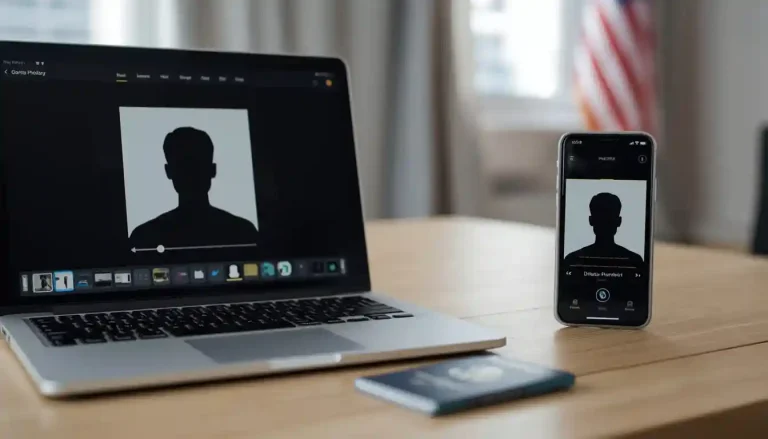
- Two Color Photographs: Ensure your photos meet the strict guidelines outlined in our complete DV Lottery Application Guide and Photo Requirements.
- Sealed Medical Envelope: If your panel physician gave you a sealed envelope, bring it unopened. (Some clinics send it digitally to the embassy).
- Visa Fee Payment: Be prepared to pay the $330 DV fee per person if you have not paid it beforehand.
- Certified Translations: Any document not in the local official language or English must have a certified English translation.
- Courier Delivery Confirmation: Many embassies require you to register your passport delivery address online (via portals like USTravelDocs or CGI Federal) before your interview. If your embassy requires this, you must bring the printed registration slip.
Civil Documents: Originals vs. Photocopies
You must bring the original versions (or official certified copies) of all civil documents, plus one regular photocopy of each. The officer will keep the photocopies and return your originals.
| Document Type | Who Needs It? | Key Requirement |
|---|---|---|
| Birth Certificates | All applicants (Spouse and Children) | Must be issued by the official custodian of birth records. |
| Marriage Certificate | Principal applicant and spouse | Must be the official legal marriage record. |
| Divorce / Death Certificates | Anyone previously married | Required for all prior marriages to prove they ended legally. |
| Police Certificates | All applicants aged 16 and older | Must cover your current country of residence and any country where you lived for 6+ months. |
| Court/Prison Records | Anyone with a past conviction | Must bring original court rulings, regardless of when the event happened. |
Education and Work Experience Proof
The Diversity Visa program has strict education and work requirements. You must bring official evidence proving you qualify. This means presenting one of the following:
- Education Proof: A high school diploma or official transcripts showing you completed a full 12-year formal education course.
- Work Experience Proof: Employment letters, job contracts, or pay records showing you have at least two years of experience within the last five years in a qualifying occupation. Crucially, the U.S. Department of Labor must designate this occupation as Job Zone 4 or 5, with a Specific Vocational Preparation (SVP) rating of 7.0 or higher on their O*NET database.
Financial Proof and the Public Charge Rule
Unlike standard family-sponsored immigrant visas, DV applicants do not legally need an I-864 Affidavit of Support. However, consular officers must ensure you will not become a “public charge” relying on U.S. government welfare.
To prove you can support yourself financially, it is highly recommended to bring:
- Recent bank statements showing personal savings.
- A job offer letter from a U.S. employer.
- Property ownership documents.
- An I-134 form (Declaration of Financial Support) from a relative or friend in the U.S. as backup evidence.
Navigating the DV Medical Examination Requirements
You cannot simply visit your family doctor or a local neighborhood clinic for your immigrant visa medical checkup.
The U.S. government only accepts medical exams completed by an officially designated Panel Physician licensed by the U.S. Department of State.
Authorized Panel Physicians Only
Every U.S. embassy maintains an exclusive list of authorized clinics within that country.
Schedule your appointment as soon as you confirm your interview date. Most embassies recommend finishing the exam at least three to four weeks before your interview.
- Your printed interview appointment information.
- A valid passport for each family member.
- Recent passport-style photographs.
- Your DS-260 confirmation page.
- All past childhood and adult immunization records.
Fees vary widely depending on the country. For example, at the U.S. Embassy in Dhaka, the standard adult medical fee is approximately BDT 9,104. Always check your local embassy’s medical instructions page to confirm the exact local clinic locations and payment methods.
Vaccinations and the DS-3025 Form
During your visit, the physician conducts a physical examination, reviews your medical history, takes a chest X-ray, and administers required blood tests.
The doctor will also review your vaccine history and record every completed dose on the official DS-3025 Vaccination Documentation Worksheet.
- Required shots: Depending on your age and health history, you must receive standard vaccines required by the CDC. These typically include MMR (Measles, Mumps, Rubella), Polio, Tdap, Hepatitis B, Varicella, and seasonal influenza during winter months.
- Keep your copy: The clinic will hand you a personal copy of the completed DS-3025 form. Keep this paper safe. You will need it later for civil surgeon paperwork, school admissions, or job verifications in the United States.
- Delivery of results: Depending on your embassy, the clinic will either forward your digital medical file directly to consular officers or hand you a sealed medical envelope. Never open a sealed medical envelope yourself. Tampering with the seal invalidates the entire medical exam.
Top Diversity Visa Interview Questions (And How to Answer)
The consular interview usually takes less than five minutes. The officer’s goal is simple: confirm your identity, ensure your qualifications are real, and verify that you will not become dependent on government welfare.
While the U.S. Department of State does not publish an official interview script, experienced immigration attorneys and past applicants report that officers consistently focus on these key areas.
| Consular Question | What the Officer Verifies | Best Answer Approach |
|---|---|---|
| What is your full name and date of birth? | Identity confirmation | Answer clearly. Match the details exactly as printed in your passport. |
| What is your highest level of education? | DV program eligibility | State your degree plainly and offer your original high school diploma. |
| What do you currently do for a living? | Work background | State your current job title, company name, and how long you have worked there. |
| When and where did you get married? | Genuineness of marriage | State the exact wedding date and location without hesitating. |
| Where do you plan to settle in the U.S.? | Relocation preparation | Name the city and state you entered on your DS-260 form. |
| How do you plan to support yourself financially? | Public charge assessment | Mention your liquid personal savings, marketable job skills, or family support. |
Questions on Travel Intent and Family Ties
If you applied with a spouse or children, expect the officer to ask a few cross-check questions:
- How did you and your spouse meet? Answer naturally with specific dates and places.
- Do you have close relatives currently living in the United States? Only name relatives you previously declared on your DS-260.
- Have you ever been refused a U.S. visa or overstayed in another country? Always answer with total honesty. Concealing a prior visa rejection triggers an automatic fraud finding.
Common Reasons for DV Lottery Refusals and Delays
Hearing that your visa is delayed or denied is disappointing, but knowing why it happens helps you avoid fatal mistakes. Most delays fall under specific legal clauses.
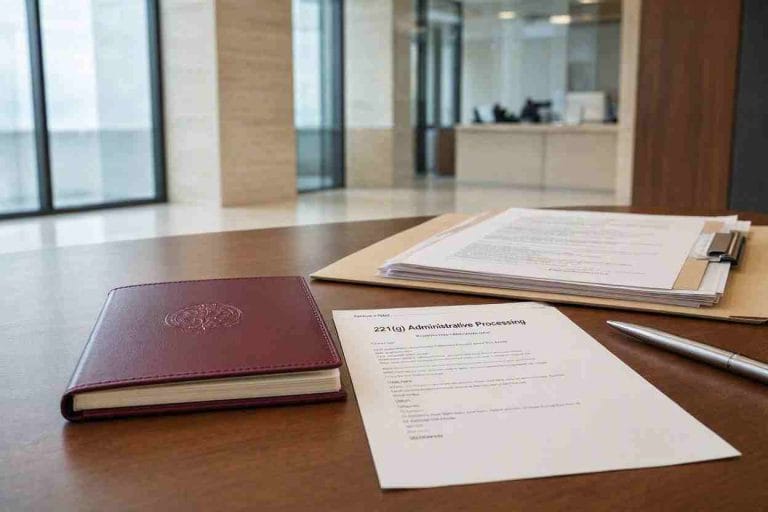
Decoding the 221(g) Administrative Processing
Receiving a refusal sheet under Section 221(g) of the Immigration and Nationality Act (INA) is not necessarily a permanent denial.
A 221(g) action is a temporary pause. It means the consular officer cannot complete the assessment until you supply a missing document or until administrative background checks clear.
- Missing paperwork: Common triggers include an outdated police certificate, a missing marriage record, or an incomplete vaccine list.
- The September 30 deadline: For Diversity Visa selectees, timing is critical. All DV numbers for a fiscal year legally expire at midnight on September 30. If your 221(g) hold is not resolved and issued before that cutoff date, your selection is permanently lost.
- Fast response: If you receive a 221(g) slip, gather and deliver the exact requested items immediately through the embassy’s designated courier.
Fatal Errors: Marriage Fraud and Application Inconsistencies
Some mistakes cause permanent damage to your international immigration record. Under INA §212(a)(6)(C), committing fraud or willful misrepresentation triggers a permanent ban from entering the United States.
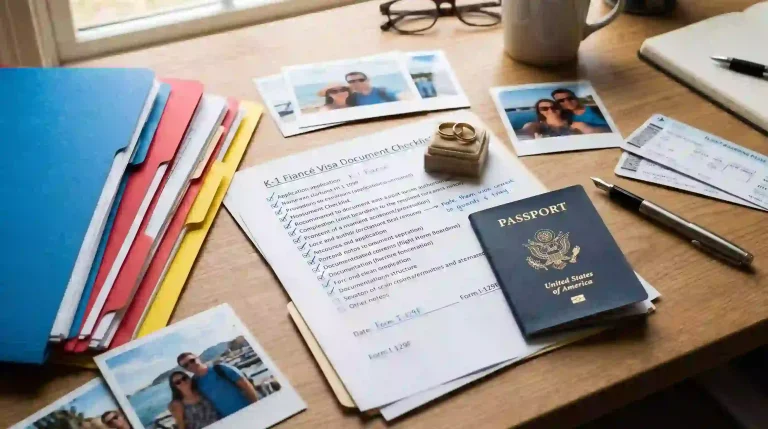
- Last-minute sham marriages: Marrying someone right after winning the lottery purely to give them a derivative visa is considered fraud. Consular officers aggressively cross-examine newly married couples. You must show strong proof of a genuine relationship, including old photographs, shared lease agreements, and message histories.
- DS-260 discrepancies: Claiming you had a diploma or specialized job experience on your entry form, but failing to show matching certificates at the window, will result in an immediate refusal for failing to meet basic program eligibility.
What Happens After the Consular Interview?
Once the officer concludes your interview, you will receive one of three immediate outcomes: an approval, a 221(g) pending notice, or a direct refusal.
If Your Visa Is Approved
When the officer approves your file, they retain your passport to print the machine-readable immigrant visa foil.
- The sealed visa packet: The embassy will return your passport with your new visa stamp. In many cases, you also receive a sealed manila packet containing your original documents. Do not open this envelope. You must hand it directly to the U.S. Customs and Border Protection officer at your port of entry.
- Visa expiration window: Your immigrant visa validity date is strictly linked to your medical examination date, not your interview date. Visas generally expire exactly six months from the day of your medical exam. You must enter the United States before that date passes.
- Pay the USCIS Immigrant Fee: Before boarding your flight to the U.S., log into the USCIS online portal and pay the $235 USCIS Immigrant Fee. This fee covers the processing and mailing of your physical Green Card to your U.S. address.
If Your Visa Is Refused
If an officer issues an outright refusal under an ineligibility clause (such as lacking the minimum high school education), there is no administrative appeal process available. Consular decisions are non-reviewable.
You cannot appeal a DV refusal to an immigration court. Your only option is to apply again in future lottery cycles if you remain eligible.
While winning the lottery offers an incredible path to permanent residency, it relies entirely on random selection. For individuals fleeing conflict, persecution, or severe hardship in their home countries, alternative legal pathways exist. Explore our detailed guide on US Humanitarian Immigration Options to evaluate other protective relief programs.
FAQs
What should I do if my interview date is set too close to September 30?
Contact your assigned embassy immediately through their official visa inquiries form. Request an expedited appointment by explaining that your case risks timing out before the mandatory September 30 fiscal year deadline.
Can I change my interview location to another country after submitting the DS-260?
Yes, but only under valid circumstances. If you moved legally to another country for work or study, you can contact the consular section in your new country of residence and request a case transfer from KCC or your previous post.
What happens if my child turns 21 while waiting for the interview?
Under the Child Status Protection Act (CSPA), a derivative child who turned 21 after selection may remain eligible as a minor, provided their calculated CSPA age stays under 21. Check with an immigration attorney or consular staff to verify your child’s calculated age lock.
Does having an unpaid traffic ticket or minor civil fine disqualify me?
No. Minor civil traffic violations that did not involve arrests, drugs, or criminal convictions generally do not disqualify you. However, you must disclose all arrests or court proceedings honestly on your form.
Sources of Information
- U.S. Department of State: Prepare for the Diversity Visa Interview
- U.S. Department of State: Prepare Supporting Documents
- CDC Guidelines: Vaccination Requirements for Panel Physicians
- USCIS: Immigrant Fee Payment Guide