US Humanitarian Immigration Options: 2026 Rules & New Fees
Navigating the US immigration system can feel overwhelming. But if you are looking for safety, fleeing a difficult situation, or seeking a better life, understanding your US humanitarian immigration options is the most important step.
Many people think getting a green card or visa is only about having a family sponsor or a high-paying job. That is not true. The US government offers several humanitarian pathways to help victims of abuse, individuals fleeing persecution, and those facing life-threatening emergencies.
In this comprehensive 2026 guide, we will break down exactly how these programs work. We will cover the latest rules, fees, and processing timelines so you can make informed decisions. Let’s explore the real options available to you.
1. DV Lottery Application Guide and Photo Requirements
The Diversity Visa (DV) program is one of the most popular ways to get a US green card. The process starts with a simple online registration, but making a small mistake can disqualify you instantly.
How to Enter the DV Lottery
The only official way to enter is through the US Department of State’s Electronic Diversity Visa (E-DV) website. You must submit your entry electronically during the specific registration window. For example, the DV-2026 window ran from October to November 2024. Entering the lottery is completely free. You only pay fees (like the DS-260 fee) if you win and proceed with the visa process.
Strict Photo Rules You Must Follow
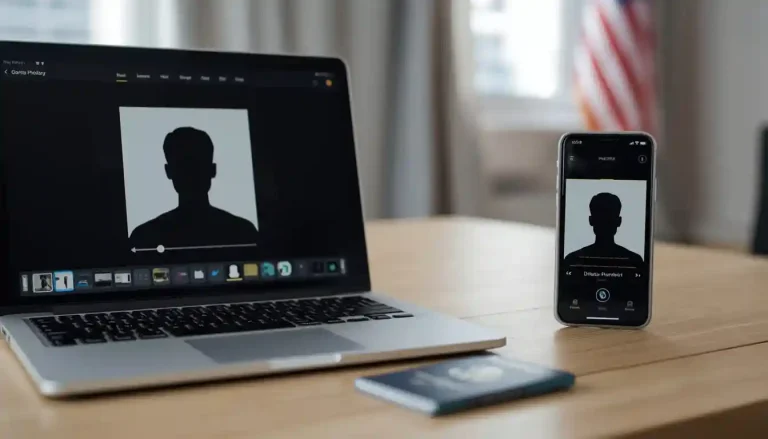
A bad photo is the number one reason entries get rejected. Here is what you need to know about the DV lottery application guide and photo requirements:
- Your photo must be taken within the last six months.
- Do not reuse a photo from a previous year. If you do, your entry will be disqualified automatically.
- You cannot use a group photo. Each family member needs their own separate photo.
- The image must be a JPEG, exactly 600×600 pixels, and under 240 KB.
- Use a plain light background, take off your glasses, and make sure your head takes up 50 to 69% of the frame.
Family Members When you apply, you must list your spouse and all unmarried children under 21. This includes stepchildren and adopted children, even if they are not planning to move to the US with you.
2. Diversity Visa Lottery Interview Preparation
Winning the lottery is just the first step. You still need to pass the consular interview to get your visa.
Once you check your status and see that you won, you need to file Form DS-260. Then, you wait for your case number to become “current” in the Visa Bulletin.
What Happens at the Interview?
Proper Diversity visa lottery interview preparation is critical. You must bring your passport, birth certificate, police records, educational or work proof, the DS-260 confirmation page, and medical results. Sometimes, the officer might ask for an I-134 form to prove you have financial support.
The consular officer will ask questions to make sure your education or work history matches what you wrote on your DS-260. They will also verify your family details. Remember, you have a strict deadline. If your visa is not issued by September 30 of the fiscal year, your selection expires permanently. There are no appeals.
3. U Visa Eligibility for Victims of Qualifying Crimes
If you are a victim of a serious crime in the US, you might qualify for a U visa. This visa protects victims who help law enforcement investigate or prosecute crimes.
Who Can Apply? To meet the U visa eligibility for victims of qualifying crimes, you must prove a few things. First, you must be a victim of a specific crime, such as domestic violence, felonious assault, human trafficking, or stalking. Second, the crime must have happened in the US or violated US laws.
Most importantly, you must have suffered substantial physical or mental abuse. You also need to prove that you have helpful information and are actively helping law enforcement.
Forms and Timelines You need to file Form I-918 and include Supplement B, which is the certification from law enforcement proving you helped them. If you have inadmissibility issues, you will also need to file a waiver using Form I-192.
The US government only issues 10,000 U visas per year. Because the demand is so high, there is a massive backlog. Wait times can take years. However, once you have held U status for three years, you can apply for a green card using Form I-485.
4. VAWA Self-Petition Green Card Checklist
No one should have to stay in an abusive relationship just to get a green card. The Violence Against Women Act (VAWA) allows victims to file for themselves. Your abusive family member will never know you applied.
You can apply if you are the abused spouse, child, or parent of a US citizen or Lawful Permanent Resident (LPR). You use Form I-360 for this. There is no filing fee.
To win your case, you need solid proof. Here is the core VAWA self petition green card checklist:
- Qualifying Relationship: You must prove your relation to the abuser. If you are a spouse, you must show it was a good-faith marriage.
- Abuse Evidence: You need proof of battery or extreme cruelty. This includes police reports, medical records, and protective orders.
- Shared Living: You must prove that you lived with the abuser at some point.
- Good Moral Character: You need a clean background check.
Processing times are currently long. It usually takes between 25 and 52 months. If a green card is immediately available for your category, you can file Form I-485 at the exact same time.
5. Temporary Protected Status (TPS) Work Permit Eligibility
TPS protects people already in the US when their home country faces war, disaster, or extreme danger. It stops deportations and lets you work legally.
To get TPS, you file Form I-821. For the work permit, you file Form I-765 under category (c)(19).
Meeting the temporary protected status work permit eligibility rules requires three main things:
- You must be a national of a country the US government has officially designated for TPS.
- You must prove continuous physical presence in the US by specific dates.
- You must have a clean criminal record with no security bars.
Crucial 2026 Update: Rules changed recently. New TPS-based work permits are now reportedly capped at just one year. Several country designations were also heavily litigated or terminated in 2025 and 2026. Always check the official USCIS country list before spending money on an application.
6. Humanitarian Parole Application Form I-131 Guide
Sometimes, you face a life-or-death emergency and cannot wait months or years for a visa. This is where humanitarian parole comes in. It grants temporary permission to enter the US for urgent reasons or significant public benefit.
You must read a proper humanitarian parole application form i-131 guide before filing. Parole is not an immigration status. It does not give you a green card. It only lets you stay for the shortest time needed to resolve your emergency.
How to Apply You file Form I-131. The fee is $630 for most applicants. You also need a financial sponsor in the US who will file Form I-134 or I-134A.
Why People Get Denied Many applicants make a huge mistake. They try to use humanitarian parole as a shortcut to bypass the normal visa lines. Officers deny these instantly. You must prove real, immediate urgency.
7. Special Immigrant Juvenile Status (SIJS) Requirements
SIJS is a lifeline for undocumented children in the US who have survived abuse, neglect, or abandonment.
This process does not start with immigration. It starts in a state juvenile court. A judge must issue a specific order. Only then can you file Form I-360 with USCIS. There is no filing fee.
Here are the strict Special immigrant juvenile status requirements:
- The applicant must be under 21 years old.
- They must be unmarried.
- A state court must declare that reuniting with one or both parents is not viable due to abuse, abandonment, or neglect.
- The court must confirm that returning to the child’s home country is not in their best interest.
The EB-4 Backlog If USCIS approves the SIJS petition, the child qualifies for an EB-4 green card. However, there is a massive visa backlog for countries like Mexico, El Salvador, Guatemala, Honduras, and India. You often have to wait years before a green card actually becomes available.
8. Affirmative Asylum Application Process Timeline
Filing for asylum is complex. You must apply within one year of arriving in the US. There are only a few exceptions, like changed home country conditions or extraordinary circumstances.
The 2026 rules introduced major changes to the affirmative asylum application process timeline. First, you must pay a new $100 filing fee for Form I-589. Second, there is now an Annual Asylum Fee of $102 for FY2026.
You must pay this every year your case is pending. You have exactly 30 days to pay it through the portal once you get the notice. If you miss this deadline, USCIS will reject your case and cancel your work permit.
The normal process involves filing the form, attending a biometrics appointment, and then going to an asylum interview.
9. Asylum Applicant Work Permit Clock Rules
You cannot work immediately after asking for asylum. You must wait for the EAD clock.
You apply for the work permit using Form I-765 under category (c)(8). Understanding the asylum applicant work permit clock rules is essential. You can file your application exactly 150 days after USCIS officially receives your complete asylum application. However, USCIS cannot actually grant or issue your work permit until 180 days have passed.
Warning: The clock will stop if you cause any delays. If you miss your biometrics appointment or ask to reschedule your interview, your clock pauses. It will only restart on the date of your newly scheduled interview.
The rules changed significantly recently. The fee is now $550 for an initial permit and $275 for renewals. Also, work permits are now only valid for a maximum of 18 months.
10. Advance Parole Travel Document Form I-131
If you have a pending asylum or adjustment case, you cannot just leave the US. You need permission to come back.
You must file an advance parole travel document form I-131. This document lets you travel abroad and legally re-enter.
However, you must be extremely careful. Traveling outside the US while your case is pending is very risky. If you use Advance Parole to visit the specific country where you claimed persecution, the government may assume your fear is fake.
This can destroy your asylum claim. Finally, remember that having Advance Parole does not guarantee your re-entry. Customs and Border Protection (CBP) always makes the final decision at the airport.
2026 US Humanitarian Immigration Options: Quick Reference Data
Comparing different immigration pathways can get confusing. The table below provides a quick side-by-side overview of official USCIS form numbers, current filing fees, and indicative processing timelines.
| Humanitarian Program | USCIS Form | Official Fee (2026) | Indicative Processing Time |
|---|---|---|---|
| DV Lottery Entry | E-DV Online Portal | Free to enter | Fixed annual fiscal schedule |
| Affirmative Asylum | Form I-589 | $100 filing + $102 annual fee | Varies widely by asylum office |
| Asylum Work Permit (Initial) | Form I-765 (c)(8) | $550 | After 180-day clock eligibility |
| Asylum Work Permit (Renewal) | Form I-765 (c)(8) | $275 | 3 to 6 months |
| U Visa (Crime Victims) | Form I-918 & Supp B | No filing fee | 21.5 to 27.5 months (waitlisted) |
| VAWA Self-Petition | Form I-360 | No filing fee | 25 to 51 months |
| Temporary Protected Status (TPS) | Form I-821 & Form I-765 | Varies by country notice | 6 to 12 months |
| Humanitarian Parole | Form I-131 & Form I-134 | $630 | Expedited case-by-case basis |
| Special Immigrant Juvenile (SIJS) | Form I-360 & Court Order | No filing fee | Subject to EB-4 Visa Bulletin |
| Advance Parole Travel Doc | Form I-131 | Standard filing fee | 6 to 12 months |
Crucial Legal Nuances Every Applicant Must Know
1. The Public Charge Exemption (INA §212(a)(4)) Worried about your income? Here is the good news. Most humanitarian options (like Asylum, VAWA, U Visas, and TPS) are completely exempt from the strict “Public Charge” rule.
- You do not need to show a huge bank balance.
- The government will not deny your case just because you used Medicaid or food stamps in the past.
2. Warning: Beware of “Notario” Fraud Thousands of cases get rejected every year because applicants trust the wrong people.
- In the US, a “notary” is not a lawyer. They only witness signatures.
- They cannot give you legal advice or fill out your Asylum or VAWA forms.
- Always hire a licensed US immigration attorney or a DOJ-accredited representative to protect your future.
Two Fatal Mistakes That Ruin Approvals
1. Forgetting Certified Translations Do you have documents in your native language? You cannot just translate them yourself. USCIS requires a certified English translation for every foreign document.
- This includes birth certificates, marriage certificates, and police records.
- The translator must sign a statement proving the translation is accurate.
- If you submit uncertified translations, USCIS will delay or deny your case instantly.
2. Ignoring the 10-Day Address Rule (Form AR-11) Humanitarian cases often take years to process. If you move to a new house, you must tell USCIS within exactly 10 days.
- You must file Form AR-11 online.
- If you forget, USCIS will mail your interview notice or fee updates to your old address.
- You will miss your interview, and they will cancel your entire case.
FAQs
How do I check if my asylum EAD clock has stopped?
For affirmative cases, you can use the official USCIS Clock Stoppage Online (CSOL) Tool on their website. It shows every stoppage event, the exact reason, and your total accrued days.
Can I include my family in my asylum work permit application?
Your spouse and unmarried children under 21 can apply for a work permit if they are listed as derivatives on your asylum application. However, each family member must file their own separate Form I-765.
Does an H-1B visa holder need Advance Parole to travel?
No. As long as you maintain a valid H-1B status before leaving, you can re-enter the US using your H-1B visa without needing Advance Parole.
Can my Advance Parole application be denied if I am in removal proceedings?
Yes. You are generally not eligible for Advance Parole if you are currently under removal proceedings or if you are in the US without a valid immigration status.
How much does it cost to renew my asylum work permit?
For subsequent EAD renewals under the old rules, applicants could request a fee waiver if they demonstrated an inability to pay. However, under the strict 2026 changes, the standard renewal fee is set at $275 with no waivers available.
Sources of Information
- Official forms, fee schedules, and filing guides: USCIS Official Website
- Diversity Visa instructions and technical photo specifications: U.S. Department of State – Electronic Diversity Visa
- Monthly priority dates and green card availability: U.S. Department of State – Visa Bulletin
- Form I-589 filing and affirmative asylum procedures: USCIS Asylum Information
- Victims of qualifying crimes and petition certifications: USCIS Victims of Human Trafficking and Other Crimes
- Country-specific designations and physical presence cutoffs: USCIS Temporary Protected Status (TPS)