Overcoming a Paragraph V 4.2c Refusal UK Visa: Proving Home Ties and Intent to Depart
Receiving an official refusal letter from UK Visas and Immigration (UKVI) is deeply frustrating, particularly when a caseworker doubts your intent to return home. A refusal under Appendix V: Visitor means your application lacked objective documentation showing an unavoidable requirement to leave Britain.
Overcoming a paragraph v 4.2c refusal uk visa decision requires proving you are not using visitor routes to live in the UK, work quietly, or establish primary residency. The Entry Clearance Officer (ECO) must see that your life remains firmly anchored abroad.
Caseworkers assess every application strictly on the balance of probabilities rather than emotional claims. Without clear evidence linking your livelihood, family duties, and financial assets directly to your home country, UKVI automatically classifies you as an overstay risk.
Reversing this outcome demands replacing personal assurances with structured, verifiable third-party documentation. Submitting clear proof of active employment, local assets, and domestic responsibilities will establish an indisputable intent to depart on schedule.
If your refusal notice includes multiple statutory grounds alongside departure concerns, start by reviewing our foundational guide on the [uk standard visitor visa refusal guide]. This ensures you identify every evidentiary gap before preparing fresh legal representations.
What Does a Paragraph V 4.2c Refusal UK Visa Mean?
A refusal under this specific paragraph indicates that the Home Office doubts the temporary nature of your travel. The caseworker suspects your center of life is shifting toward Britain rather than remaining rooted in your home country.
Appendix V and the “De Facto Resident” Trap
Paragraph V 4.2(c) states that visitors must not live in the UK through frequent trips or make Britain their main home. Many fall into the trap of frequent or successive visits uk visa refusals by relying on the informal 180-day guideline outlined under GOV.UK Visitor Rules.
For example, if you spend five months in London and return home for just four weeks before applying again, UKVI gets suspicious. Caseworkers will assume you lack real daily duties and are using visitor routes to live there permanently.
The entry clearance officer looks closely at your job continuity and family commitments abroad. They evaluate your circumstances against the published UKVI Visit Caseworker Guidance to determine whether your declared career can survive extended absences.
The Legal Evidentiary Standard
Entry Clearance Officers do not require absolute certainty to issue a refusal notice against your application. Instead, they decide every outcome based on the uk visitor visa balance of probabilities legal threshold under UK immigration rules.
Under this standard, the officer only needs to believe it is more likely than not that you will overstay. Simple promises in a cover letter claiming you will return hold zero legal value during this formal administrative review.
The final decision depends entirely on objective documents issued by independent third-party institutions. Without verifiable records proving an urgent need to resume your life back home, the balance of probabilities works directly against your application.
Core Pillars for Proving Strong Ties to Your Home Country
Overcoming a Paragraph V 4.2c refusal UK visa goes beyond simply showing a return flight ticket. You must pass the strict genuine visitor test by proving that your life back home is too established and active to abandon.
The Home Office wants to see an ongoing economic life, not just parked money in an account. A standard ‘No Objection Certificate’ (NOC) from your employer is rarely enough to convince a highly skeptical entry clearance officer.
You must back up your employment claims with matching tax returns and consistent salary bank statements. Caseworkers specifically look for regular daily living expenses on your statement to confirm your active center of life remains in your home country.
If you own property, simply submitting a title deed is often considered insufficient evidence. You should include recent tax receipts, rental income proofs, or active business invoices to establish undeniable proof of return to home country.
Family responsibilities provide another powerful anchor when defending against a frequent or successive visits uk visa refusal. Instead of just attaching a marriage certificate, highlight your daily commitments, such as caring for elderly parents or managing your children’s schooling.
Always cross-check your paperwork with the official UKVI Supporting Documents Guide before submission. Providing this level of deep, verifiable evidence makes it extremely difficult for any caseworker to justify a refusal on the balance of probabilities.
Crafting an Evidentiary Cover Letter to Overcome V 4.2c
A cover letter is never a place for emotional pleas or hollow promises about returning home. In practical file audits, we consistently observe that caseworkers completely ignore subjective claims and rely entirely on an objective documentary roadmap.
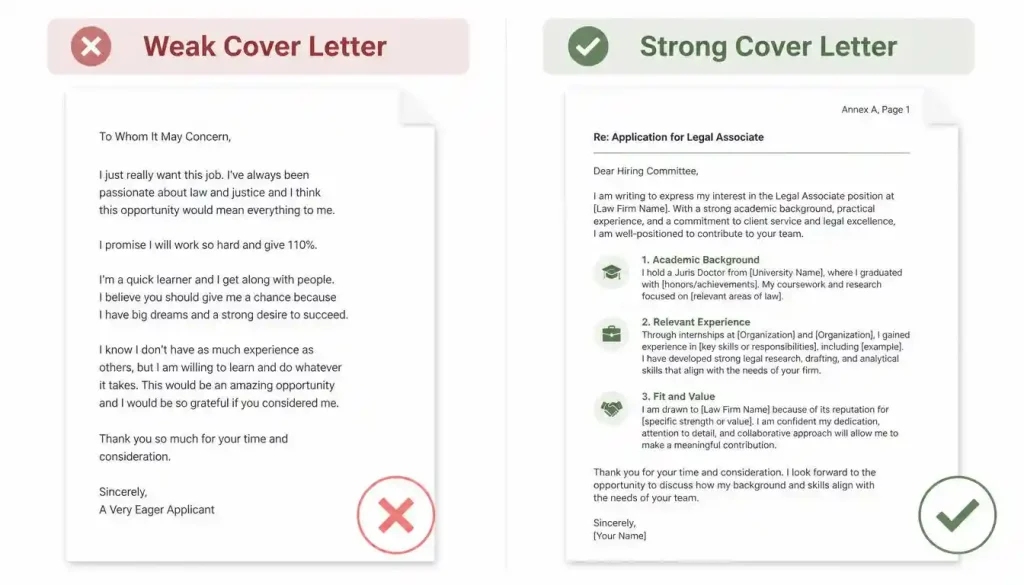
When addressing a Paragraph V 4.2c refusal, your cover letter must act as an executive summary of your strict ties to your home country. It should directly neutralize the previous refusal points by explicitly cross-referencing your newly submitted, verifiable documents.
Entry clearance officers process dozens of complex applications daily and will never spend time guessing why a specific large bank deposit exists. You must explicitly connect your proof of return to home country to the exact page numbers in your submitted evidence bundle.
“If your previous application was rejected for lacking financial clarity or unexplained funds, you must read our dedicated guide on How to Explain Large Cash Deposits in UK Visa Bank Statement before drafting your new cover letter.”
Refusal Risk Warning: Simply writing “I promise to leave the UK before my visa expires” holds zero legal weight under the genuine visitor test. Caseworkers base decisions entirely on the balance of probabilities, requiring independent third-party evidence that mathematically forces your departure.
Ready-to-Use V 4.2c Rebuttal Snippet
If your previous refusal doubted your intentions due to extended stays, adapt this evidentiary declaration snippet in your new cover letter:
“Regarding my previous refusal under Paragraph V 4.2©, my revised application provides undeniable UK visa financial evidence. Please refer to Annex A (Salary Bank Statements, Pages 1-6) and Annex B (Current Tax Returns), confirming my active economic center of life in [Home Country]. My scheduled leave strictly aligns with my verified employment obligations, legally compelling my return by [Date].”
Always align your written declarations strictly with the standards outlined in the official UKVI Visit Caseworker Guidance. By providing a clear itinerary supported by a legally indexed cover letter, you systematically dismantle the caseworker’s justification for a subsequent refusal.
The Math Caseworkers Run When They Read Your Bank Statement
Numbers tell a story. Caseworkers do not just skim your closing balance and move on; they run a quiet, cold calculation against your claimed lifestyle.
Think about it. Why would a rational professional spend four months of hard-earned savings on a ten-day holiday in Manchester? They wouldn’t. The moment your projected expenses look disproportionate to your economic background, the refusal notice under Paragraph V 4.2(c) is already half-written.
The Realistic Liquidity Math
Forget internet myths about having arbitrary thousands of pounds sitting in an account. In real refusal letters, rejections hinge on basic fiscal logic:
- The 30% Hard Ceiling: Your entire itinerary cost must never exceed 30% of your verifiable, unencumbered liquid funds (≤ 30%). If a two-week holiday empties out your account, caseworkers assume you are traveling to work, not to sightsee.
- The Living Buffer: Once you return, you must still have at least three times your typical monthly living expenses left untouched (≥ 3x monthly burn rate). You cannot return home broke.

Here is where panicked applicants dig their own graves. They buy non-refundable Virgin Atlantic or British Airways tickets thinking, “This proves I am coming back.” It does not.
It shows desperation. The official GOV.UK Standard Visitor Guidance explicitly warns you not to pay for tickets upfront, yet thousands do it anyway—and lose every penny.
What Actually Protects Your Wallet
Let us look at how an entry clearance officer actually views your upfront spending versus how a smart traveler protects their capital:
| Expense Item | What Panicked Applicants Do | How the Caseworker Views It (Real Impact) |
|---|---|---|
| Airfare | Buying non-refundable round-trip tickets upfront. | Ignored as proof of return. Financial loss: 100% when refused. |
| Hotels | Prepaying expensive non-refundable London hotel rooms. | Suspicious if it drains regular cash flow. High cancellation penalty. |
| Prudent Plan | Submitting hold itineraries and flexible, pay-later reservations. | Viewed as logical, low-risk financial planning. Loss: Exactly zero. |
Refusal Risk Warning: Never deposit a sudden lump sum to make your balance “look right.” Caseworkers instantly flag this as parked funds. If you cannot prove the legitimate, historical source of every major inflow, you are handing them the easiest refusal of their shift.
“To understand the exact rules of submitting unpaid hold bookings without risking your money, read our complete guide on Flight Itinerary for UK Visa and Hotel Booking Requirements.”
FAQ: Resolving Hidden V 4.2(c) Anxieties
How soon can I reapply after a V 4.2(c) refusal?
You can legally reapply the very next day, as there is no cooling-off period. However, reapplying without providing fundamentally new, objective evidence guarantees a second rejection.
Can I appeal a standard UK visitor visa refusal?
No. There is no right of appeal or Administrative Review for standard visitor refusals. Your only practical option is submitting a fresh, strongly evidenced application.
Does a UK visa refusal affect USA or Schengen applications?
Yes. Through the ‘Five Eyes’ alliance, the UK shares immigration data with countries like the USA and Canada. You must honestly declare your UK refusal, as their databases are cross-checked.
Can a wealthy UK sponsor override my lack of personal funds?
No. A sponsor only covers your trip costs (Paragraph V 4.3). Caseworkers must still assess your personal finances (V 4.2c) to ensure you have strong economic ties compelling your return home.
Pre-Submission Audit Checklist
Do not click submit until your evidence bundle passes this final caseworker-level forensic check. Failing even one of these points leaves a fatal gap in your balance of probabilities.
The Source of Funds Check Verify that any sudden lump sum deposit that falls outside your regular salary or normal income pattern is explicitly explained and backed by a corresponding payslip, invoice, or tax document.
The Document Indexing Check Ensure your cover letter does not just list documents, but explicitly points the caseworker to the exact page number and Annex where your active financial ties are proven.
The Translation Compliance Check Confirm that every non-English document includes a fully certified translation. The translation must strictly contain the translator’s credentials, contact details, signature, and confirmation of accuracy as per Home Office rules.
The Proportionality Check Calculate your total proposed UK trip cost one final time. If it exceeds 30% of your verifiable, unencumbered savings, you must legally reduce your itinerary length before submission.
Official References & Statutory Sources
- Immigration Rules Appendix V: Visitor — The core statutory framework outlining the Genuine Visitor Test.
- Home Office Visit Caseworker Guidance — The official internal assessment manual used by entry clearance officers.
- UKVI Guide to Supporting Documents — The definitive checklist for required financial and civil evidence.
- Standard Visitor Application Overview — Official guidelines on bookings and the application process.