Sponsoring Relatives After Obtaining US Citizenship: Complete Guide
Taking the Oath of Allegiance is a massive life milestone. If you recently completed your immigration journey, perhaps by following our US Citizenship Naturalization Complete Guide, congratulations. Now, your next big priority is likely reuniting your family.
The legal process of sponsoring relatives after obtaining us citizenship is one of the most powerful benefits of your new passport. However, the US immigration system is incredibly strict about who qualifies and how fast they can arrive.
Filing the wrong paperwork for the wrong family member will result in lost fees and years of delay. Let’s break down exactly who you can bring to America and how the system works in 2026.
Who Can You Sponsor After Obtaining US Citizenship?
When new citizens ask, “who can a us citizen sponsor for a green card?”, the answer depends entirely on the exact family relationship. United States Citizenship and Immigration Services (USCIS) divides family members into two distinct groups.
Your relative’s group determines whether they can move to the US in a few months, or if they have to wait more than a decade.
Immediate Relatives (Spouse, Parents, Unmarried Children Under 21)
This is the fastest and most prioritized category in US immigration. As a fully naturalized citizen, you can instantly sponsor your spouse, your parents, and your unmarried children who are under 21 years old. (Note: You must be at least 21 years old yourself to sponsor your parents).
The biggest advantage of the Immediate Relative category is that there are no annual visa limits. Your family members do not have to wait in a multi-year line for a green card to become available. As soon as the government processes your paperwork, they can book their tickets to America.
Family Preference Categories (Siblings and Married Adult Children)
If your relatives do not fit into the first group, they fall into the “Family Preference” system. This category allows you to sponsor your brothers and sisters, your married children of any age, and your unmarried children who are over 21.
Unlike immediate relatives, the government strictly limits how many family preference green cards are issued each year. Because demand is so high, massive backlogs exist. For example, bringing a sibling to the US can take anywhere from 10 to 15 years, depending on their country of birth.
Step-by-Step Guide to Sponsoring Relatives After Obtaining US Citizenship
The government requires a mountain of proof to ensure your relationship is real and that your relative will not become a financial burden on the state. The process is broken into two main legal steps.
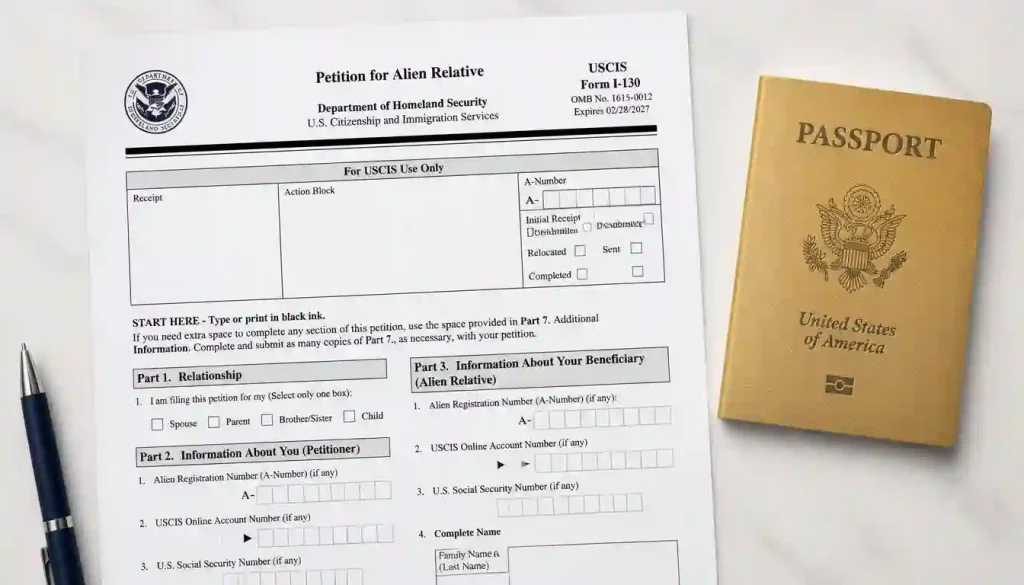
Filing Form I-130 (Petition for Alien Relative)
Everything begins with Form I-130. You, the US citizen sponsor, must submit this form to USCIS. You must include your naturalization certificate, proof of your relationship (like marriage or birth certificates), and passport-style photos. This form simply proves to the government that a valid family relationship exists.
The Affidavit of Support (Form I-864) and Financial Requirements
Once the I-130 is approved, you are not done. You must submit Form I-864, the Affidavit of Support. This is a legally binding contract where you promise to financially support your relative.
To qualify, your household income must meet at least 125% of the US poverty guidelines. The government will strictly review your recent IRS tax returns to verify this. If you have been living or working abroad, managing your taxes can be tricky. We strongly recommend reading our guide on Mastering US Citizenship Expatriate Tax Reporting Requirements: A Global Guide to ensure your tax records are perfect before submitting this financial contract.
Form I-130 Processing Time 2026: How Long Will It Take?
The form i-130 processing time 2026 varies wildly depending on your relative’s category. Because USCIS processes applications across different service centers, wait times change frequently.
Below is a realistic breakdown of the current timelines:
Estimated Processing Times for Family Sponsorship
| Family Category | I-130 Processing Time | Total Wait for Green Card |
|---|---|---|
| Immediate Relatives (Spouse, Parents) | 10 to 14 Months | 12 to 18 Months |
| Unmarried Adult Children (Over 21) | 3 to 5 Years | 7 to 9 Years |
| Married Adult Children | 4 to 6 Years | 13 to 15 Years |
| Siblings (Brothers and Sisters) | 5 to 8 Years | 15+ Years |
If you are looking at the bringing siblings to us as a citizen timeline, you must have extreme patience. It is a long-term investment, but filing early is the only way to secure their place in line.
How Much Does It Cost to Sponsor an Immigrant Family Member?
Knowing the exact cost to sponsor an immigrant family member prevents applications from being rejected due to incorrect payment. The fees are split into multiple stages.
First, you must pay the USCIS filing fee for Form I-130, which is currently $625 if you file online, or $675 if you file by mail.
Once the petition is approved and moves to the National Visa Center (NVC), you must pay additional fees. The immigrant visa application processing fee (Form DS-260) is $325. Finally, the Affidavit of Support review fee is $120. You should expect to spend around $1,100 in direct government fees per relative, not including medical exams or travel costs.
Common Mistakes That Delay Family Green Cards
Even a minor paperwork error can pause your application for months. When this happens, USCIS will issue a Request for Evidence (RFE), halting your entire timeline until you respond.
The most common mistake is submitting foreign language documents, like a marriage or birth certificate, without a certified English translation. Every foreign document must be accompanied by a signed letter from a professional translator certifying its accuracy.
Another frequent error is failing to plan for the long separation. Because petitions for siblings and adult children take many years, you will likely need to travel overseas to visit them. If you face a sudden family emergency abroad and realize your travel documents are expired, you must act fast. Review the Expedited US Passport Application Timeline to learn the exact steps to quickly secure your passport and avoid missing your flight.
FAQs
Can my relative visit me on a tourist visa while their I-130 is pending?
Yes, but they will face intense questioning at the border. A pending I-130 shows “immigrant intent.” They must strongly convince the Customs and Border Protection (CBP) officer that they will return to their home country after a short visit, otherwise they will be denied entry.
Will a past criminal record prevent me from sponsoring a family member?
Usually, no. A standard criminal history does not disqualify a US citizen from filing an I-130 petition. However, if your convictions involve specific offenses under the Adam Walsh Act (such as crimes against minors), you are legally barred from sponsoring any relative.
What happens to the green card process if the US citizen sponsor dies?
If the petitioner dies before the green card is approved, the I-130 is automatically revoked. However, the immigrant relative can request “Humanitarian Reinstatement” from USCIS. If approved, the government allows a substitute sponsor to take over the financial contract, saving the application.
Can I sponsor my undocumented relative who is already living in the US?
It depends on how they entered. If they entered legally (like on a tourist visa) and simply overstayed, an immediate relative (spouse, parent, minor child) can usually sponsor them to adjust status without leaving the country. If they entered illegally, the process requires complex legal waivers.
Sources & References
For the most up-to-date forms, fee schedules, and legal guidelines, always refer directly to official government portals:
- Download official forms and check direct filing addresses at the USCIS: I-130, Petition for Alien Relative.
- Review visa availability and interview processing steps at the US Department of State: National Visa Center (NVC).